Best Trading Tools in 2026: Platforms, Software & More


Getting started with day trading is exciting—until you hit the wall of tools available.
Charting platforms. Technical analysis tools. Brokers. Screeners. Scanners. News feeds. Bots. Journals.
It adds up fast—and fast becomes overwhelming.
So here’s the thing: you don’t need every tool. You just need the right ones. This guide breaks down essential trading tools that are actually worth using in 2026.
Our team tested and compared dozens of them—free and paid—to help you build a tech stack that’s simple and effective.
Let’s get into it.
1 – The Trading Platform
A trading platform is the core of your setup.
It’s where you monitor stock charts, run your technical analysis, and execute trades. If it’s unreliable, slow, or cluttered, everything else breaks down.
At a minimum, you need something that gives you clean, responsive charts with the ability to draw support and resistance levels, apply technical indicators, and track prices in real or close to real-time.
If you’re serious about trading—or just want to avoid bouncing between different tools—go for a platform that includes features like multi-timeframe views, custom indicators, and order execution directly from the chart.
This saves time and helps you stay focused on what matters: making good decisions.
ProRealTime is a strong example of this kind of platform. It combines a professional charting experience with a wide range of technical analysis tools while staying approachable enough for beginners.
It also lets you backtest strategies, automate parts of your workflow, and place trades from the same interface.
There’s no shortage of trading platforms out there. But only a few offer the combination of speed, clarity, and flexibility you actually need as a trader. If you want to explore more options, we’ve reviewed them in detail here: best trading platforms for beginners.
2 – A Reputable Broker
A broker is more than just a place to hold your funds—it’s the service that actually sends your orders to the market. And depending on the instruments you trade, the region you’re in, and your time horizon, some brokers will be a much better fit than others.
Your broker directly affects your entries and exits. Poor execution quality can result in slippage, partial fills, or delays—especially during volatility, when spreads widen and systems get tested.
Cheaper trades don’t mean much if your order slips or gets delayed when it matters most.
Be cautious with so-called zero-commission offers. While the trades themselves may be free, costs often show up elsewhere—like in wider spreads, overnight fees, or slower execution. Some brokers also sell your order flow to market makers, which can affect how your trades are routed.
I recommend and use Interactive Brokers because it offers strong execution, competitive pricing, and access to a wide range of global markets. It’s also well-regulated, with a long-standing reputation for transparency and stability.
Just as important, it integrates seamlessly with ProRealTime—my trading platform of choice—which makes it easy to manage both analysis and execution in a single, flexible workflow.
Before opening an account, take the time to test the paper trading version of the platform, read the fine print on fees, and make sure it aligns with how you actually trade.
3 – News Feeds
Earnings beats, Fed speeches, economic reports—these are the kinds of events that trigger volatility. And volatility is where most day traders find opportunity. The challenge is catching those shifts early, before they’re fully priced in.
That’s why many traders rely on tools built specifically for real-time market updates. The best ones let you track specific tickers, filter out irrelevant noise, and surface important headlines quickly. Some also integrate economic calendars and custom alerts based on your watchlist.
These tools are especially useful when you need to understand why something is moving right now—without getting overwhelmed:
- Benzinga Pro – Real-time headlines, customizable filters, and a strong alert system.
- Bloomberg Terminal – The industry standard, though prohibitively expensive for most retail traders.
- X (ex- Twitter) – Still useful for fast-moving macro or geopolitical news, especially direct announcements from public figures or institutions.
That said, not all trading decisions are made in the moment. Many traders, especially futures traders or anyone who starts planning their session before the market opens, use trusted publications to get a clearer picture of the overnight narrative.
Reviewing key developments from the U.S., Europe, or Asia helps identify which sectors might move, where volatility could spike, and what to watch when the session begins.
For that broader preparation, these sources are consistently reliable:
- Wall Street Journal – Excellent for understanding market drivers, company strategy, and broader economic shifts. Ideal for pre-market prep or post-session analysis.
- Financial Times – Known for global macro coverage and institutional focus.
- Barron’s – Offers forward-looking commentary and investor sentiment analysis.
Most brokers include a basic news tab, but it’s often too slow or chaotic to act on.
You don’t need to follow every headline. But when things start moving, it helps to know what’s behind it.
4 – Screeners and Trading Alerts
Every strategy depends on specific conditions—price levels, volume spikes, or volatility setups. A screener helps you scan the market for exactly that.
You define your conditions. The screener shows you which stocks, futures, or assets match them. Whether you’re looking for breakouts, pullbacks, or unusual volume, it’s your first filter before even looking at a chart.
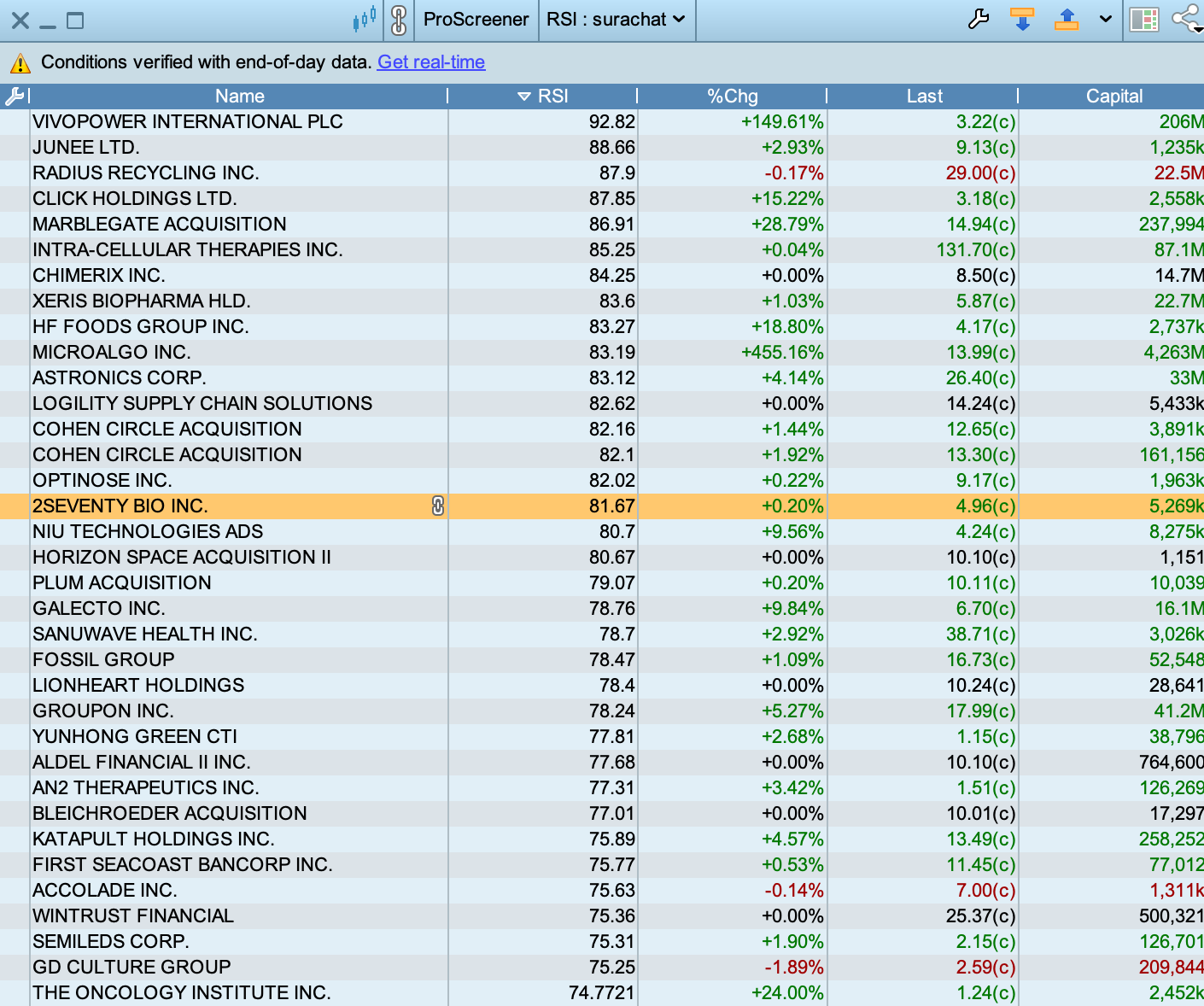
Most quality screeners let you save your filters, so you can rerun them quickly each day. Some also offer pre-built scans if you want ideas to explore or refine.
Alerts add another layer. Instead of checking charts all day, you can set alerts to trigger when price hits a key level, volume spikes, or an indicator crosses a threshold you’ve set. You get notified in real time and decide whether to act.
If you’re monitoring multiple assets with specific price levels in mind, alerts keep you in the loop without needing to stay glued to the screen.
Here are a few platforms that stand out:
- ProRealTime – Advanced screeners with precise technical filtering and chart-based alerts.
- TradingView – Easy to use with strong alert flexibility and a large library of community-built scanners.
- Finviz Elite – Fast and visual, with strong fundamentals plus pre-market and intraday filters.
5 – Trading Courses
You don’t need a course to start trading. There’s plenty of free information online, and most beginners can learn the basics—like how charts work, what indicators do, and how to place an order—without paying a cent.
But not all content is created equal.
Many free resources are produced by platforms that benefit when you trade more. Even if they’re not misleading, their advice often pushes activity rather than sound decision-making. Others are built by people with no real trading experience and even less teaching ability.
A good trading course does two things well: it teaches you how markets work, and it gives you tools to develop your own process. It focuses on skill-building, not on selling the dream.
No course can guarantee profits. Trading is risky—and the reality is that most retail traders lose money. The more a course simplifies the path to success, the more cautious you should be.
That said, theory alone isn’t enough. Paper trading platforms are an excellent place to start. They let you test what you’ve learned, experiment with strategies, and make your first mistakes in a risk-free environment.
You’ll start to see the gap between theory and execution. And that’s where real progress begins.

Othmane has been swing trading for years and builds on experience in investment banking. He writes regularly about trading and market analysis, and has passed Level I of the CFA Program along with earning a double Master’s degree in Financial Analysis.