Interactive Brokers Review 2026: The Broker Built for Serious Traders


Most brokers compete on simplicity. Interactive Brokers competes on everything else.
Founded in 1978, IB has spent nearly five decades building what amounts to a professional trading terminal accessible to retail accounts. You get 150+ markets across 33 countries, commissions that undercut most competitors, and tools built for traders who know what SmartRouting means.
The catch? The platform assumes you already know what you’re doing.
In this Interactive Brokers review, we cover:
- What IB actually costs, with real trade calculations
- Whether the global market access justifies the complexity
- How IB’s customer support holds up under Trustpilot scrutiny
- Where IB fits vs other brokers and trading platforms
- Three things IB does better than anyone, and three things it still gets wrong

Interactive Brokers is one of the largest electronic brokers in the world. Founded in 1977 and listed on the Nasdaq (IBKR), IB serves over 4 million clients across 200+ countries.
From a single account, you can trade stocks, options, futures, forex, bonds, and ETFs across 170+ exchanges in 37 countries.
Commissions start at $0.005 per share on US stocks, margin rates at 4.14%, and IB pays interest on uninvested cash (up to 3.14% on USD). The trade-off is complexity: the platform is built for traders who already know what they want.
Capital at risk. Not financial advice.
Our Take on Interactive Brokers
Few retail brokers give you this combination: 150+ exchanges in 33 countries, sub-dollar commissions on US stocks, institutional-grade order routing, and interest paid on your uninvested cash. The financial backbone is real too. IB is listed on the Nasdaq, carries $17.5 billion in equity capital, and has been operating since before most of its competitors existed.
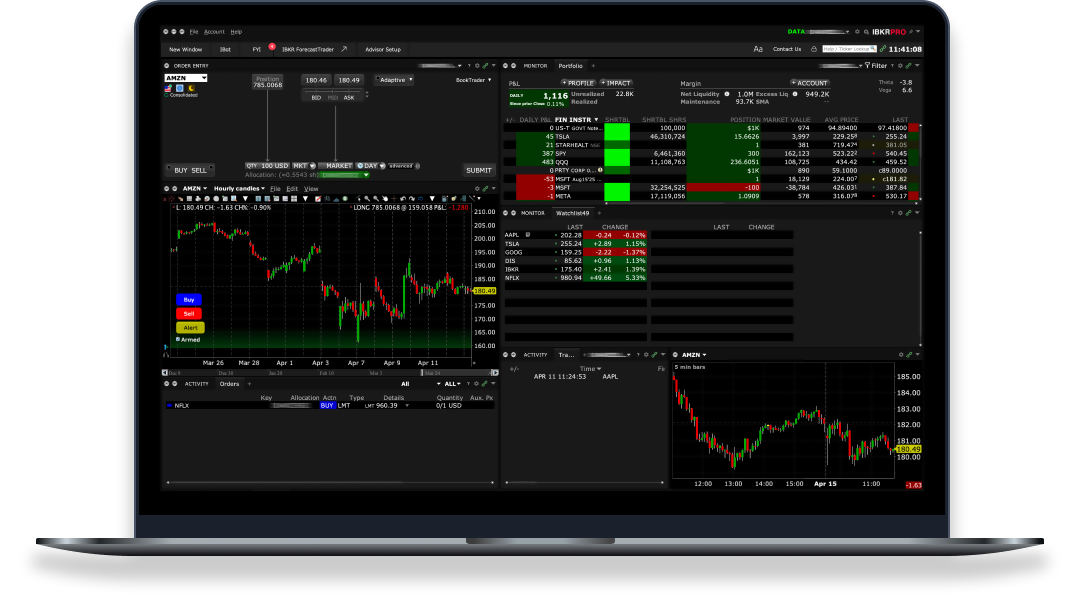
But “most capable” and “most pleasant to use” are different things. IB’s interface assumes you know what you want and where to find it. The Trader Workstation is powerful but overwhelming. Customer support leans on AI chatbots before connecting you to a human. And live market data, which many competitors bundle for free, costs extra.
If you trade actively across multiple markets, few brokers match IB on cost and access. If you just want to buy a few ETFs and check your phone once a week, you’ll be overpaying in complexity for features you’ll never touch.
Who Is Interactive Brokers For?
Choosing a broker comes down to what you actually trade and how often. IB built its platform for three types of users.
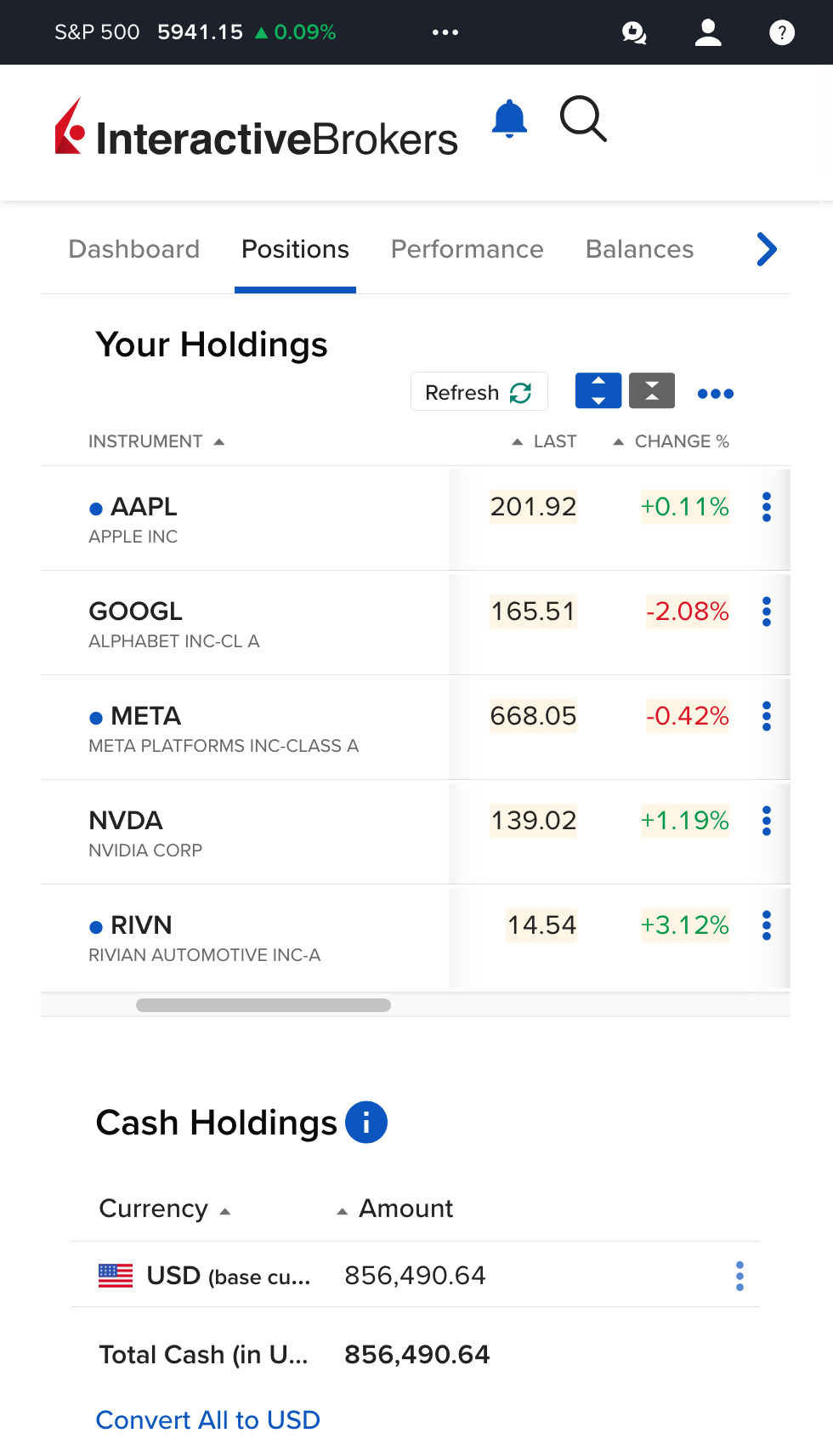
The active multi-asset trader. You trade stocks, options, and futures across US and European exchanges. You care about execution quality, you understand order types beyond “market” and “limit,” and you’re willing to learn a complex platform if it saves you money on every trade. IB’s tiered pricing rewards volume, and SmartRouting gets you better fills than most retail brokers.
The global long-term investor. You want to build a diversified portfolio across markets. IB lets you hold stocks in Tokyo, bonds in London, and ETFs in New York from a single account, all denominated in their native currencies. The multi-currency feature alone saves hundreds per year in conversion fees compared to brokers that force everything through a single base currency.
The algo and API trader. IB’s API is well documented and widely adopted in retail brokerage. If you write your own strategies or connect third-party platforms, IB is the default choice. Direct market access, 100+ algorithmic order types, and support for Python, Java, and C++ out of the box. Since July 2026, that openness reaches AI tools too: IB exposes an MCP connector that lets ChatGPT, Claude Code, or Cursor read your portfolio and draft instructions. You still place every order yourself.
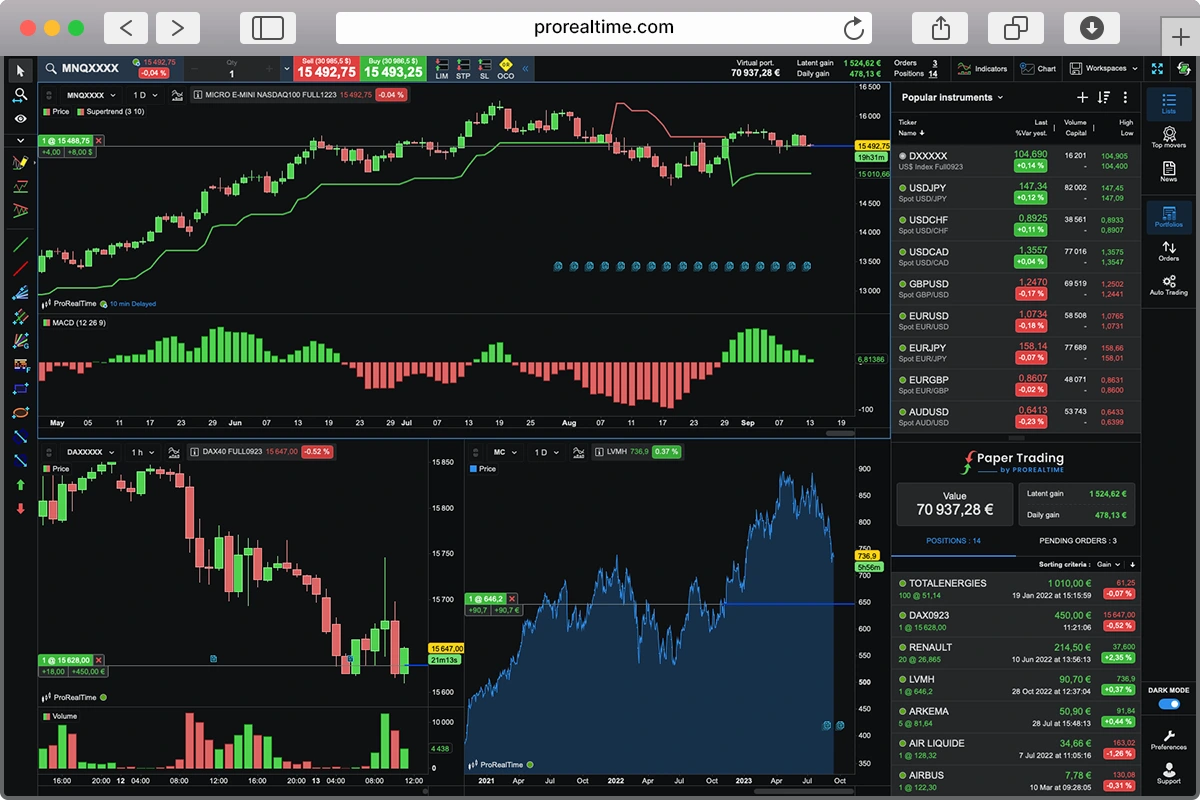
IB also integrates with a wide ecosystem of third-party platforms. ProRealTime connects to IB for charting, backtesting, and automated trading. TradingView supports IB as a broker connection for direct chart trading. And platforms like QuantConnect and NinjaTrader use IB as their execution layer.
Look elsewhere if you’re a first-time investor who wants a guided experience, or if you manage under €5,000 and the complexity isn’t worth the fee savings.
Is Interactive Brokers Safe?
IB has been handling other people’s money since 1978. In an industry where brokers appear and disappear, that track record counts.
Regulation
Interactive Brokers holds licenses in more jurisdictions than most retail brokers have employees.
European clients open accounts with Interactive Brokers Ireland Limited, regulated by the Central Bank of Ireland. UK clients go through Interactive Brokers (U.K.) Limited, regulated by the FCA. The group also holds licenses from ASIC in Australia, MAS in Singapore, SFC in Hong Kong, SEBI in India, and CIRO in Canada.
European accounts are covered by the Irish Investor Compensation Scheme up to €20,000. UK accounts are protected by the Financial Services Compensation Scheme up to £85,000.
Ownership and Financial Strength
Interactive Brokers Group is publicly traded on the Nasdaq under the ticker IBKR. Public listing means quarterly earnings reports, audited financials, and regulatory scrutiny that private brokers don’t face.
As of early 2026, IB carries $17.5 billion in equity capital, with $12.4 billion in excess of regulatory requirements. The company serves nearly 4 million client accounts across 200+ countries. Thomas Peterffy, the founder, remains chairman.
What Clients Say
Interactive Brokers holds a 3.5 out of 5 on Trustpilot, based on over 5,100 reviews. On Google Play, the IBKR Mobile app scores 4.5 out of 5 with more than 66,000 ratings.
The gap between those two numbers tells a story. Trustpilot tends to attract users with complaints. App store ratings capture a broader cross-section.
What users praise most: Low commissions, especially on US stocks. Global market access from one account. Reliability as a serious, long-established broker. Long-term users describe IB as dependable and institutional-grade.
What users complain about most: Platform complexity, with TWS described as “confusing” and “not user-friendly.” Login friction from mandatory two-factor authentication with no opt-out and frequent session timeouts. Customer support that’s hard to reach by phone, with slow ticket resolution.
For context, Saxo scores similarly on Trustpilot (3.5/5). Neo-brokers score higher on ease of use but serve a different market.
Pricing: What Does It Cost?
IB runs two pricing models: IBKR Lite, available to US residents only with $0 commissions on US stocks, and IBKR Pro, available worldwide with volume-tiered pricing. European users default to IBKR Pro.
Commission Rates
| Asset | Commission | Minimum |
|---|---|---|
| US stocks (Pro Fixed) | $0.005/share | $1.00 |
| US stocks (Pro Tiered) | From $0.0035/share | $0.35 |
| European stocks (Fixed) | 0.05% of trade value | €3 |
| US options (Pro Tiered) | From $0.15 to $0.65/contract | – |
| US futures | $0.85/contract | – |
| Forex | 0.2 basis points | $2/order |
What You Actually Pay
Scenario 1: Buy 50 shares of Siemens at €180 (total €9,000). Commission: €9,000 x 0.05% = €4.50.
Scenario 2: Buy 100 shares of Apple at $230 via IBKR Pro Fixed. Commission: 100 x $0.005 = $0.50, rounded up to the $1 minimum.
Scenario 3: One E-mini S&P 500 futures contract. IB execution: $0.85. Exchange fees: ~$1.38. Regulatory: ~$0.02. Total: roughly $2.25 per contract.
Other Fees
No account opening fee. No inactivity fee (removed in July 2021). No custody or maintenance fee. Two free withdrawals per month, then €1 by SEPA transfer or €8 by non-SEPA wire. Currency conversion at the interbank rate with a $2 minimum commission.
Interest on Uninvested Cash
IB pays interest on cash sitting in your account. IBKR Pro clients with over $100,000 in net asset value earn up to 3.38% on USD balances. The catch: IB pays nothing on the first $10,000.
For smaller accounts, the blended rate drops fast. Trade Republic pays 2% on EUR with no threshold and no floor, which is simpler for accounts under €50,000.
How IB Compares on Cost
Against Saxo: IB charges lower commissions on US stocks and lower margin rates (starting at 4.14%). Saxo charges comparable European stock minimums (from €3) but its US equity commissions and margin rates are higher.
Against DEGIRO: DEGIRO charges €1 on core selection ETFs, cheaper than IB’s €3 minimum on European stocks. But DEGIRO pays no interest on cash and has no futures trading. For a detailed look at how IB stacks up, see our Interactive Brokers vs Saxo comparison.
Global Market Access: 150+ Markets from One Account
Most retail brokers give you access to a handful of exchanges. IB gives you 150+ markets across 33 countries, with trading in 28 currencies.
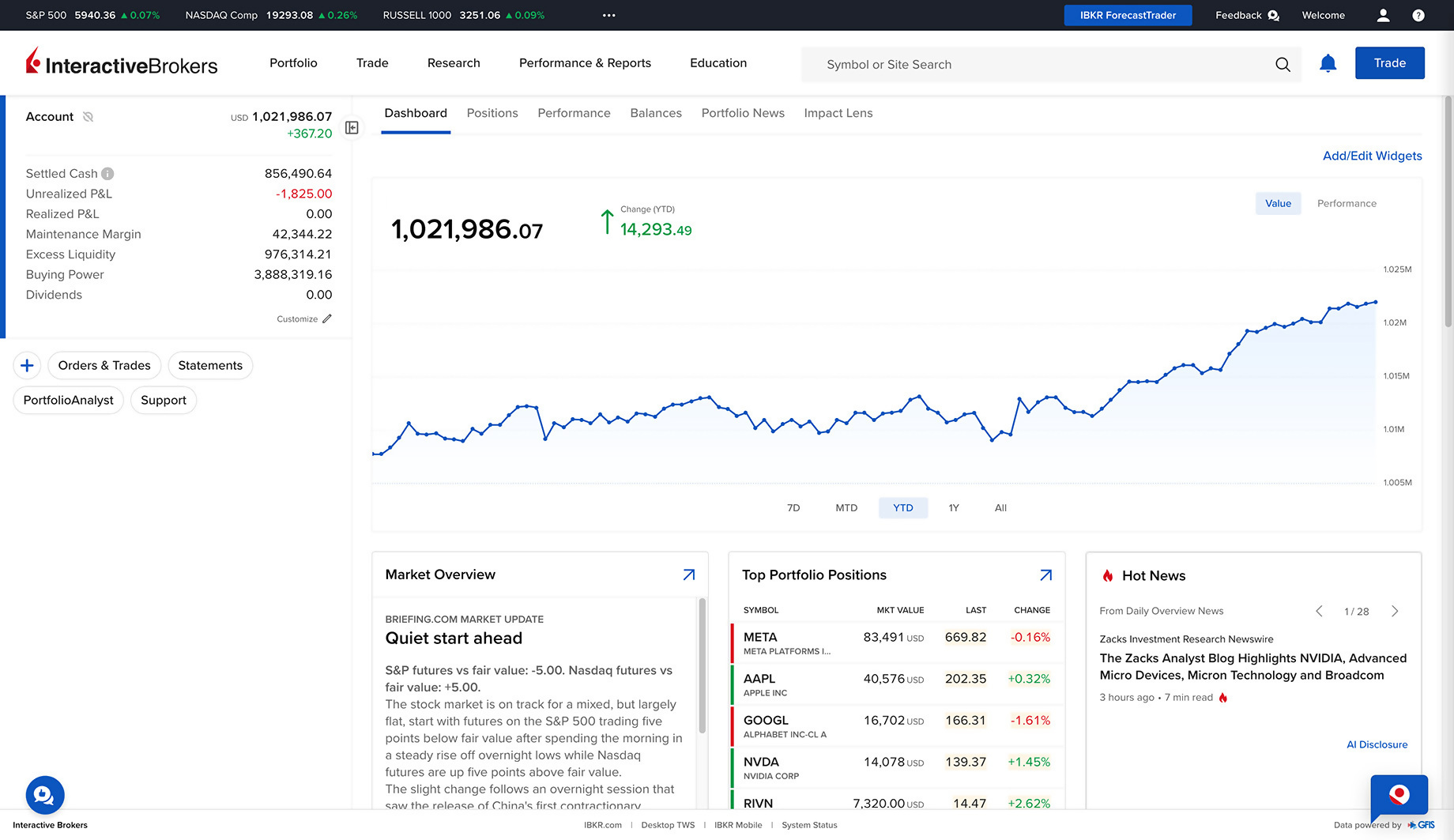
You can buy equities in Tokyo, government bonds in London, futures in Chicago, and options in Sydney, all from the same account, all settled in local currency if you choose.
Multi-Currency Accounts
IB lets you hold balances in 28 currencies simultaneously. When you buy a stock listed in GBP, you can fund it from your GBP balance instead of converting from EUR. Currency conversion, when needed, happens at the interbank rate with a $2 minimum.
This matters. A broker that forces all trades through a single base currency charges you a conversion spread on every international trade. Those spreads add up over a year.
Fractional Shares
IB supports fractional share trading for US and European stocks. Minimum investment: $1 for US shares. You can set up recurring investments.
Fractional shares on European stocks are a newer addition. Not every stock qualifies: IB requires average daily volume above $5 million and market cap above $5 billion.
Beyond the Standard Asset Classes
IB gives retail traders access to products most brokers reserve for institutional clients. Over one million bonds, including US treasuries, corporates, and non-US sovereign debt. Forecast contracts for event-based trading. Overnight sessions on US equities.
If you need access to a specific market, IB probably has it.
3 Key Strengths
1. Pricing That Rewards Active Traders
IB’s commission structure gets cheaper the more you trade. The tiered model drops per-share costs at each volume threshold, with no platform fees eating into savings.
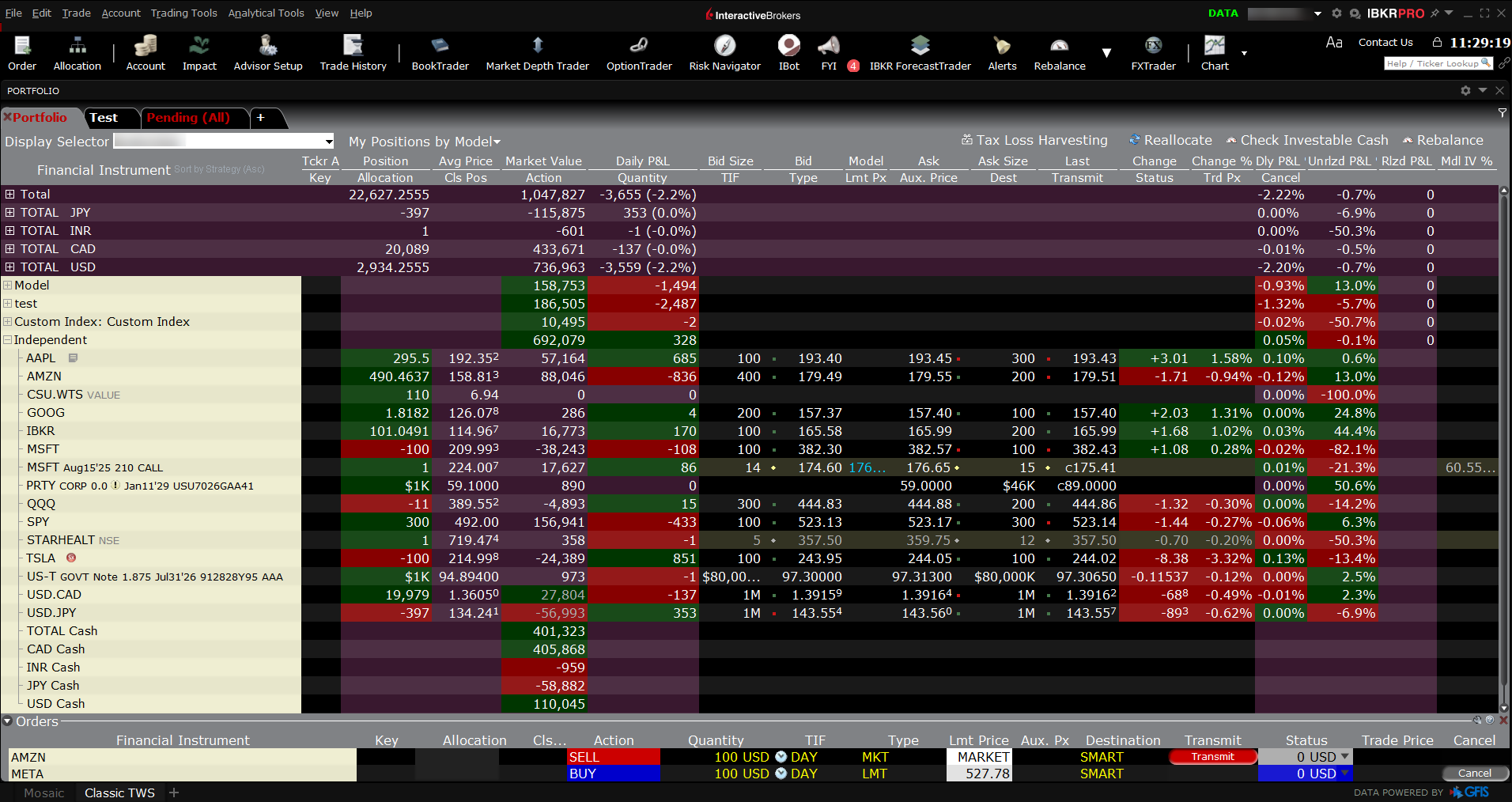
But commissions are only half the picture. Margin rates start at 4.14%, well below the 8-12% range at most retail brokers. For traders using leverage, that difference adds up to thousands per year on a six-figure portfolio.
Then there’s the interest on cash. Earning up to 3.38% on uninvested USD turns idle cash into a minor revenue stream. DEGIRO pays nothing on cash. Saxo pays interest but at lower rates for comparable balances.
The fee structure shines brightest for larger accounts with higher trade frequency. Below €10,000, neo-brokers with flat fees and no interest floors are more cost-effective.
2. Execution Quality and Professional Tools
Zero-commission brokers like Trading 212 or Trade Republic make money through payment for order flow (PFOF): they route your order to a market maker who pays for it, and you get a slightly worse fill. IB takes the opposite approach. SmartRouting scans multiple exchanges in real time and routes your order to the venue with the strongest available price. You pay a small commission, but your execution is better. Over hundreds of trades per year, the price improvement compounds.
TWS (Trader Workstation) packs over 100 order types and algorithmic strategies: adaptive algorithms, VWAP, TWAP, and accumulate/distribute algos that institutional desks use to reduce market impact.
The API is where IB separates itself from every other retail broker. The TCP Socket Protocol connects directly to TWS or IB Gateway, letting you build trading systems in Python, Java, C++, or C#. ProRealTime uses IB as an execution broker for its automated trading strategies. QuantConnect and NinjaTrader also support IB as a broker connection.
IBKR Desktop, launched in 2024, strips out TWS complexity while keeping core trading functionality. Not a full replacement for TWS power users, but a significant improvement for anyone put off by TWS’s interface.
3. Financial Stability You Can Verify
IB’s financial strength is auditable, not a marketing claim. As a Nasdaq-listed company, IB publishes quarterly earnings. Auditors review the books. Regulators in a dozen jurisdictions monitor compliance.
$17.5 billion in equity capital means IB holds roughly four times what regulators require. The $12.4 billion in excess capital is a cushion designed to survive market events that would sink smaller brokers.
Client assets sit in segregated accounts, separate from IB’s own funds. In a bankruptcy scenario, client assets don’t get mixed into the liquidation pool.
Compare that with privately held brokers, where you’re trusting management’s word about the balance sheet. IB gives you audited numbers every 90 days.
3 Key Weaknesses
1. The Learning Curve Is Real
IB runs multiple platforms: TWS, IBKR Desktop, Client Portal, IBKR Mobile, GlobalTrader, Impact, and ForecastTrader. For a new user, figuring out which one to use is already confusing before you’ve placed a trade.
TWS, the deepest option, looks like it was designed for a trading floor two decades ago. Tabs, panels, sub-menus, and configuration options stack on top of each other. Experienced traders appreciate the density. New users report feeling lost.
The onboarding process adds friction. Account opening takes longer than neo-brokers, KYC asks more questions, and the first login requires setting up mandatory two-factor authentication. There’s no opt-out, and you need a smartphone with the IBKR Mobile app.
IBKR Desktop addresses the UI problem, but it’s still maturing and lacks some of TWS’s advanced features.
2. Customer Support Lags Behind the Product
IB’s support model prioritizes self-service. The knowledge base is extensive, and the AI chatbot handles common questions. Reaching a human is the problem.
Trustpilot reviews consistently flag slow ticket resolution, phone menus that loop, and difficulty getting clear answers. The chat function tends to be faster than the phone.
For routine account questions, Client Portal messaging works. For urgent issues during market hours, the experience falls short of what you’d expect from a broker managing hundreds of billions in client assets.
One workaround: platforms like ProRealTime run their own customer support on top of IB’s. If you trade through PRT connected to IB, you get PRT’s support team as a first line of contact, which tends to be faster and more responsive.
3. Additional Costs to Factor In
IB’s headline commissions are low, but the total cost picture has a few line items worth knowing about.
Market data subscriptions. Like most professional brokers, IB charges for real-time market data. Live quotes for US exchanges start around $10/month. European exchange data runs $15-30/month per exchange. A trader watching four or five exchanges could pay $50-125/month. Some neo-brokers bundle basic data for free, but they also make money from PFOF, which IB doesn’t do. See IB’s pricing page for current rates.
Interest rate thresholds. IB’s interest rates look generous at the top end (3.38% on USD), but nothing is paid on the first $10,000. Accounts under $100,000 earn a blended rate well below the headline number.
Margin requirements. European clients need €2,000 to open a margin account. Cash accounts have no minimum, but you lose access to short selling and leverage.
Interactive Brokers vs the Competition
Every broker makes trade-offs. Here’s how IB stacks up against three alternatives.
| Feature | Interactive Brokers | ProRealTime | Saxo | DEGIRO |
|---|---|---|---|---|
| Best for | Active multi-asset traders | Technical analysis & backtesting | Balanced UX & research | Low-cost ETF investing |
| Markets | 150+ exchanges, 33 countries | Via connected broker (IB, IG, Saxo) | 70+ exchanges | 50+ exchanges |
| EU stock commissions | From €3 | Via broker | From €3 | From €1 |
| Futures | Yes, $0.85/contract | Yes, via broker | Yes | No |
| Fractional shares | Yes | No | Yes | No |
| Backtesting | Limited | ProBacktest (advanced) | No | No |
| Interest on cash | Up to 3.38% USD | Via broker | Yes | No |
If you need charting and backtesting above all, ProRealTime is the specialist. PRT connects to IB for execution, giving you PRT’s charting with IB’s market access and pricing. Free for end-of-day data, from €24/month for real-time, waived when you trade actively.
If you want solid research with a cleaner interface, Saxo is the closest full-service alternative. The platform feels more polished, research integration is strong, and customer support gets higher marks. You’ll pay slightly more in commissions and margin.
If you’re building a passive ETF portfolio, DEGIRO keeps things simple. Core selection ETFs at €1, a clean interface, no pretense of being a professional trading platform.
Looking for more options? See our Interactive Brokers alternatives roundup.
The Verdict
Interactive Brokers is not trying to be the easiest broker to use. It’s built to be the deepest and cheapest, and by that measure, it succeeds.
You get access to more markets, more asset classes, and more order types than virtually any retail alternative. You pay less in commissions and margin rates than competitors with half the functionality. And you’re trusting your money to a publicly listed company with nearly five decades of history.
The price of that capability is complexity. The platforms are dense, the learning curve is steep, and customer support won’t hold your hand. If you trade actively and value access over aesthetics, IB earns its place on the shortlist. If you want smooth onboarding and a polished app, look at Saxo first.
IB’s paper trading account lets you try TWS and IBKR Desktop with simulated funds, no deposit required.
FAQ
Is Interactive Brokers good for beginners?
It depends on what kind of beginner. If you understand basic market concepts and are willing to learn a complex platform, IB can be your long-term broker. IBKR GlobalTrader and Client Portal are simpler entry points than TWS. If you’ve never placed a trade, a neo-broker with a guided experience is a better starting point.
What is the minimum deposit for Interactive Brokers?
Zero for cash accounts. There is no minimum balance to open or maintain an account. Margin accounts in Europe require €2,000 to access leverage and short selling.
Does Interactive Brokers pay interest on uninvested cash?
Yes. IBKR Pro accounts earn up to 3.38% annually on USD balances. The rate varies by currency (EUR ~1.45%). IB pays no interest on the first $10,000, and accounts need a net asset value above $100,000 for the maximum rate. See IB’s interest rate page for current rates by currency.
Does Interactive Brokers support fractional shares in Europe?
Yes. Fractional shares are available for US and European stocks with average daily volume above $5 million and market cap above $5 billion. Minimum investment: $1 for US shares.
Is Interactive Brokers safe?
IB is publicly traded on the Nasdaq (IBKR), carries $17.5 billion in equity capital, and holds regulatory licenses in over ten jurisdictions. European clients open accounts with Interactive Brokers Ireland, regulated by the Central Bank of Ireland. Client assets are held in segregated accounts.
Can I opt out of two-factor authentication?
No. Two-factor authentication is mandatory for all accounts. You need a smartphone with the IBKR Mobile app. SMS verification has been discontinued.
Are there inactivity fees?
No. IB removed inactivity fees in July 2021. No monthly maintenance, no custody fees, no minimum activity requirements.
What is the difference between IBKR Pro and IBKR Lite?
IBKR Lite gives US residents $0 commissions on US-listed stocks and ETFs but pays lower interest on cash. IBKR Pro is available worldwide with tiered or fixed pricing, direct market access, SmartRouting, and higher interest rates. European users can only access IBKR Pro.

Audrey holds a Diploma in Accounting and Financial Studies (DECF) and has over 15 years of professional experience in the banking and accounting sectors.