Here’s Why Most Traders Lose Money — And What to Do About It


If you’ve been asking, “Why do I keep losing money trading?” you’re not alone. Most traders go through it.
I’ve been trading for over a decade, and I’ve made more than my share of bad decisions. I’ve chased trades. I’ve ignored my own rules. I’ve tried to shortcut the learning curve and paid the price. These mistakes aren’t just common, they’re predictable.
Most traders lose money for the same few reasons. And until you fix them, no strategy or course will make much difference.
In this article, I’ll break down the five core reasons traders consistently lose. These aren’t tips or tricks. They’re the real problems that hold people back — and what it takes to move past them.
Let’s get into it.
1. Being Overleveraged
A common belief among beginners is that you can start with a few hundred dollars and grow it quickly. But that mindset is exactly what causes most traders to fail.
Imagine sitting down at a cash game poker table with less than 1% of the average stack. Even if you play well, you have no leverage. You can’t take a loss. You can’t push your edge. You’re just trying not to get knocked out, and everyone else at the table knows it.
That’s the position most undercapitalized traders are in.
With limited funds, you feel pressure to make every trade count. So you size up. You use leverage. You chase trades that could double your account. But one wrong move and it’s over, not because your setup was bad, but because your size left no room for error.
Then the emotional spiral begins. You hesitate. You force trades. You try to win it all back. And just like that, the account is gone.
If you’re undercapitalized, you don’t need more risk. You need more time to learn.
Start on a simulator. Take it seriously for a full year. Build your strategy, track your results, and treat every decision like real money is on the line.
Then — and only then — you can consider trading live with small positions and, more importantly, money you can afford to lose. That’s how you take emotions out of the equation and give yourself a real shot at lasting in the game.
You don’t need a big win. You need to last long enough to get good.
2. Trading Without a Plan
Most traders think they have a plan.
In reality, they just have a habit: open the platform, scan for movement, and jump into something that looks “promising.”
There’s no defined setup. No clear risk. No system to repeat.
They enter because a stock is spiking or because they saw a chart on X (ex-Twitter). They exit because it “felt like the right time” or because they panicked. Every decision is improvised, and every outcome feels like luck.
That’s not trading. That’s gambling.
Day traders who take this seriously operate differently. They know exactly what a good trade looks like before it appears. They’ve narrowed their focus to a handful of patterns that make sense to them — patterns they’ve studied, tested, and refined.
They’re not watching 100 stocks hoping something moves. They’ve already filtered the list down to the few names that meet strict criteria. And if nothing meets those criteria, they don’t trade.
They also don’t wing their exits. Every trade has a predefined stop, a clear profit target, and a consistent risk per position, often the same dollar amount on every trade. That consistency makes reviewing and improving the plan possible.
Here’s what separates real traders from frustrated dabblers:
- They treat their strategy like a system.
- They trade only what fits the system.
- They manage risk exactly the same way each time.
- And they’re fine doing nothing when the setup isn’t there.
Most importantly, they judge the quality of a trade by how well it followed the plan — not whether it made money. That mindset shift takes time to build, but it’s what turns trading into a skill you can refine rather than a streak of lucky guesses.
If your approach changes every day, your results will too. Without structure, there’s no way to improve — only to hope things go better next time.
And hope, in this game, is expensive.
3. Lack of Risk Management
Why most traders don’t survive long enough to learn
Most traders don’t blow up because of one bad setup. They blow up because they never defined how much they’re willing to lose.
Ask a losing trader how much they risk per trade, and the answer is usually vague. It depends on how confident they feel or how the last trade went. That’s not a strategy. That’s emotional exposure.
Risk management is about putting boundaries in place before the trade begins.
That includes:
- Knowing your max loss per trade (as a fixed dollar amount or small percentage)
- Having a stop that makes sense technically, not emotionally
- Sticking to that stop when price hits it — no second-guessing
- Walking away after a set number of losses in a day or week
Professional traders treat risk like a system. Some use 1% of their account. Others use a fixed dollar amount. Either way, the point is the same — if the trade fails, it costs little. And if the next trade works, it makes more than what you lost.
This is what gives your strategy breathing room. You can survive a bad day, a cold streak, or even an off week, because your capital isn’t bleeding out from oversized losses.
But let’s be clear: risk management alone won’t make you profitable. It doesn’t replace skill, strategy, or a real edge. It just keeps you in the game long enough to develop one.
You’re not here to win every trade. You’re here to make sure no single trade can take you out.
4. Overtrading and Impatience
When traders hit a few wins, they feel unstoppable. When they hit a few losses, they feel desperate. Either way, the result is often the same: they start forcing trades that don’t deserve to be taken.
Overtrading doesn’t always look reckless. Sometimes it feels productive. You’re active. You’re watching the market. You’re doing something. But without a real setup behind the trade, it’s just noise.
This is how most traders slowly blow up. Not from one mistake, but from dozens of mediocre trades taken out of boredom, fear, or overconfidence. A few wins lead to overconfidence. A few losses trigger revenge trades. Each one chips away at your capital and your focus.
The market doesn’t reward activity. It rewards precision.
Top traders know this. They wait for high-quality setups and stay out when conditions aren’t right. They don’t force it. They don’t chase. And they’re not afraid to end the day with zero trades if that’s what the market demands.
Sometimes the best trade is no trade at all.
5. Thinking that a Day Trading Course will Fix it
Learning to trade by watching courses is like asking a boxer to study fights instead of sparring.
You might pick up a few ideas, but you haven’t been hit yet. You haven’t tested your reflexes. You haven’t built instincts. And in trading, just like in boxing, that’s where the real growth happens.
When things get hard, it’s easy to believe the answer is in the next course, the next webinar, or the next guru’s “secret method.” Maybe you just haven’t found the right system yet. Maybe someone out there has the exact formula you’re missing.
That mindset is exactly what keeps the trading education industry running.
But no course, no signal group, no indicator — no matter how well marketed — can replace screen time and personal execution. Even the best tools are useless if you don’t understand what they’re showing you. If you’re blindly copying trades or relying on bots you barely understand, you’re not learning. You’re outsourcing responsibility.
A course is a tool. A signal is a tool. Neither is a solution.
Real progress comes from doing the work. Journaling trades. Reviewing decisions. Backtesting setups. Building confidence through repetition, not theory.
And the truth is, most of what you need to learn is already a Google search away. The difference isn’t access to information. It’s what you do with it.
Education helps. But without execution, it doesn’t change a thing.
Final thoughts
Most traders don’t fail because they picked the wrong indicator. They fail because they never built the habits to stay consistent.
Lack of capital, no real plan, poor risk control, emotional decision-making, and impatience — these are the five most common killers of trading accounts. And they’re all fixable.
But fixing them takes more than knowledge. It takes humility.
Ego is the silent thread that runs through most trading failures. It makes you double down on a bad trade instead of cutting it. It’s what makes you chase after a setup that doesn’t fit your plan, just to prove you’re right. And it’s what keeps you searching for shortcuts instead of doing the slow, repetitive work that builds skill.
It’s easy to think a better course, a smarter signal provider, or a new tool will change everything. But none of that matters if you can’t follow your own rules.
The truth is, most of what traders need is already free: a simulator, a simple journal, a strategy you understand, and a commitment to track, review, and improve.
You don’t need more information. You need more repetition.

Othmane has been swing trading for years and builds on experience in investment banking. He writes regularly about trading and market analysis, and has passed Level I of the CFA Program along with earning a double Master’s degree in Financial Analysis.
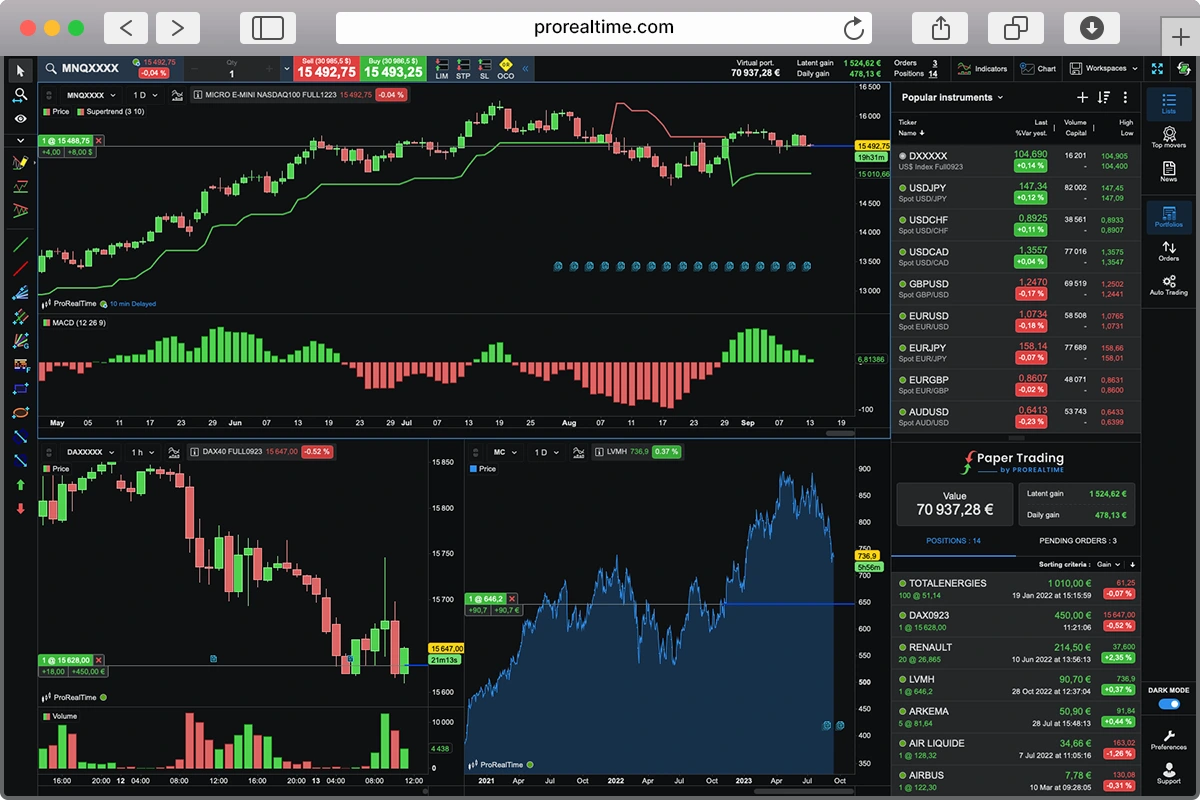
Enjoy free trading practice on
ProRealTime Paper Trading Simulator.