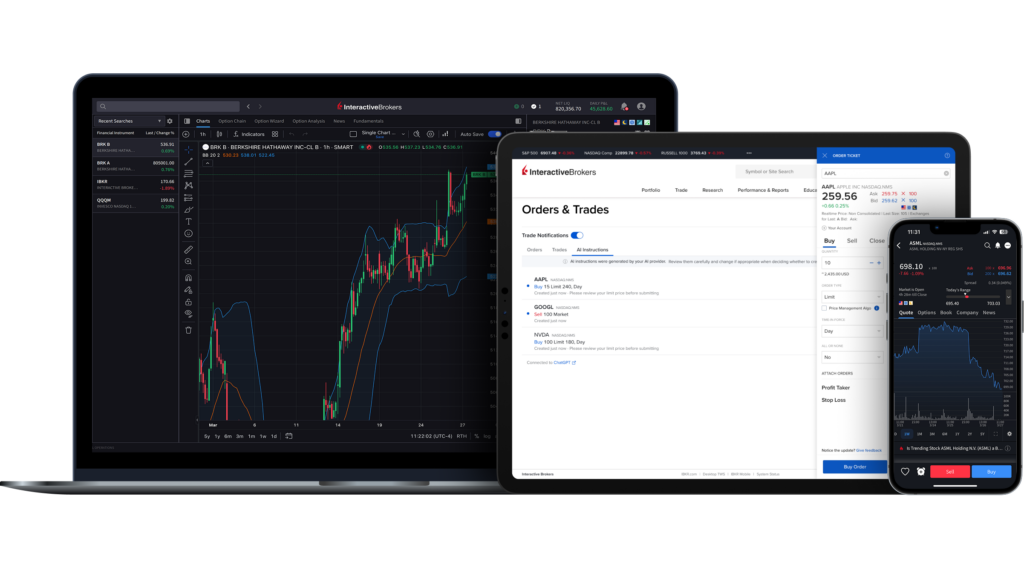
Revolut Invest Review: Strengths and Weaknesses of the Neobank


Revolut is a neobank first. Founded in 2015, the fintech built its reputation on the multi-currency card before growing into a full financial ecosystem: current account, savings, credit, insurance, and stock market investing.
With more than 75 million retail customers worldwide and a European banking licence obtained in Lithuania, Revolut is no longer a simple travel app. The Invest section now covers stocks, ETFs, bonds, CFDs, commodities, and cryptocurrencies, all from a single app.
But does that versatility make Revolut a good broker for trading? A platform too generalist, tools too thin, fees beyond the quota… or a real alternative to dedicated brokers? Here is our full analysis, focused on the angle that matters to us: trading.

Founded in 2015 by Nikolay Storonsky and Vlad Yatsenko, Revolut first won over travellers with its fee-free multi-currency card, before becoming one of Europe’s most valuable fintechs.
The neobank now counts more than 75 million retail customers worldwide and operates in the EEA through Revolut Bank UAB, a credit institution licensed by the Bank of Lithuania.
Your deposits are protected up to €100,000 by the deposit guarantee scheme, and invested assets are segregated in separate accounts.
Revolut’s Invest offer covers stocks, ETFs, bonds, CFDs on indices, stocks and commodities, and cryptocurrencies. Everything is available from the mobile app or the web trading terminal.
CFDs are complex instruments and come with a high risk of losing money rapidly due to leverage. 65% of retail investor accounts lose money when trading CFDs with this provider. You should consider whether you understand how CFDs work and whether you can afford to take the high risk of losing your money.
Our take on Revolut Invest
With its Invest offer, Revolut joins the ranks of mass-market brokers like Trade Republic.
The first pleasant surprise is the product catalogue, broader than expected. Revolut gives access to cash equities, ETFs, bonds, commodities, CFDs, and cryptocurrencies. A beginner-to-intermediate trader can cover most of their needs without leaving the app.
The free Standard plan opens a brokerage account, but every order costs €1. Free orders only appear from the Premium subscription upwards.
The business model works against the active trader, though: paying for a subscription does not lower the commission, which stays at €1 per order whatever the plan. The Standard plan therefore remains the cheapest way to place orders.
Still, Revolut’s all-in-one setup will appeal to certain traders. The neobank lets you run your current account, move funds to your investment account, and place an order within seconds, all from one app: few brokers can match that.
Who is Revolut Invest for?
| The beginner who wants a friction-free entry point |
|---|
You already run your current account at Revolut and want to place your first stock market orders without opening an account elsewhere? That is the ideal use case for Revolut Invest.
Onboarding is quick: from the Invest section, you can submit your application and provide the details needed to open an investment account. From €1, you can buy fractions of stocks or ETFs. Limit orders are available, along with access to extended-hours trading.
The limit is clear, though: the total absence of a demo account and analysis tools forces you to learn with real money, and to pair Revolut with an external trading platform as soon as your skills grow.
| The multi-asset trader |
|---|
You regularly trade US and European stocks in cash, and you also want to take positions through CFDs on indices or commodities? Revolut covers these instrument categories.
The leverage available on CFDs follows European regulatory standards. Stop-loss and take-profit orders are available and can be set when opening the position.
One warning: if your strategy relies on serious technical analysis or on connecting to third-party software like ProRealTime or MetaTrader, Revolut is not enough. Brokers like IG, Saxo, or Interactive Brokers will fit your profile better.
| The mobile trader |
|---|
You are constantly on the move, you trade from your phone, and what you value most is a responsive app and centralised cash management? Revolut meets those expectations.
The app is built for mobility: real-time notifications, a clean interface, instant currency exchange to fund your investment account. It suits the trader who places a few orders a week from their phone, without needing a multi-screen setup.
Revolut pricing: how much does it cost?
Revolut runs on a pricing model of its own. The subscription system sets both the number of free orders and the currency exchange conditions.
The free Standard plan gives access to an investment account, but every order costs €1. Free orders only appear from the Premium subscription upwards.
For a trader active on foreign markets, the €1,000 monthly currency exchange allowance on the Standard plan quickly shows its limits.
| Plan | Price/month | Free orders/month on stocks and ETFs | Commission beyond | Additional FX fees |
|---|---|---|---|---|
| Standard | €0 | 0 | €1/order | 1% above €1,000/month |
| Plus | €3.99 | 0 | €1/order | 0.5% above €3,000/month |
| Premium | €10.99 | 5 | €1/order | No fees on weekdays |
| Metal | €18.99 | 10 | €1/order | No fees on weekdays |
| Ultra | €60 | 10 | €1/order | No fees on weekdays |
⚠️ Weekend FX surcharges also apply to currency exchanges for Standard (1%) and Plus (0.5%) subscribers between Friday 5 p.m. and Sunday 6 p.m. Eastern Time. Premium, Metal, and Ultra subscribers are exempt. Plan prices shown are for France and vary slightly by country.
Other fees worth knowing:
| Fee type | Amount |
|---|---|
| Custody fees | €0 |
| Inactivity fees | €0 |
| Outgoing securities transfer | $35 per position |
| FX weekend surcharge | 1% Standard · 0.5% Plus · 0% Premium and above |
| Trading Pro | €4.99/month (included in Ultra) |
Revolut vs the main competitors
Scenario 1 – Euronext stock trader, 20 orders of €500 per month
| Plan / Broker | Subscription cost | Commissions | Commissions | Total monthly cost |
|---|---|---|---|---|
| Revolut Standard | €0 | 20 × €1 | €20.00 | €20.00 |
| Revolut Plus | €3.99 | 20 × €1 | €20.00 | €23.99 |
| Revolut Premium | €10.99 | 5 free + 15 × €1 | €15.00 | €25.99 |
| Revolut Metal | €18.99 | 10 free + 10 × €1 | €10.00 | €28.99 |
| Revolut Ultra | €60 | 10 free + 10 × €1 | €10.00 | €70.00 |
| Trade Republic | €0 | 20 × €1 | €20.00 | €20.00 |
| Saxo Classic | €0 | 20 × €2 (min.) | €40.00 | €40.00 |
| XTB | €0 | €0 (below cap) | €0 | €0 |
Subscription prices inflate the active trader’s costs. Anyone who doesn’t need Revolut’s other services is better off staying on the Standard plan.
No paid plan lowers the commission: at €1 per order, the free Standard plan stays the cheapest and now matches Trade Republic on Euronext stocks.
Over 20 orders of €500, the Standard plan ties with Trade Republic at €20, while XTB stays free below its cap. No paid plan does better.
Scenario 2 – Occasional trader, 3 orders/month of $1,000 on US stocks
| Plan / Broker | Subscription cost | Commissions | Commissions | Total monthly cost |
|---|---|---|---|---|
| Revolut Standard | €0 | 3 × €1 | €3.00 | €3.00 |
| Revolut Plus | €3.99 | 3 × €1 | €3.00 | €6.99 |
| Revolut Premium | €10.99 | 3 within free quota | €0 | €10.99 |
| Revolut Metal | €18.99 | 3 within free quota | €0 | €18.99 |
| Revolut Ultra | €60 | 3 within free quota | €0 | €60.00 |
| Trade Republic | €0 | 3 × €1 | €3.00 | €3.00 |
| Saxo Classic | €0 | 3 × €2 (min.) | €6.00 | €6.00 |
| XTB | €0 | €0 | €0 | €0 |
The occasional trader is exactly who Revolut is built for.
Over 3 orders of $1,000 on US stocks, the Standard plan stays the cheapest at €3, even if FX fees kick in above €1,000 per month. Trade Republic does just as well without FX fees, and XTB stays free.
Revolut’s three strengths
1. An all-in-one banking ecosystem
This is Revolut’s most convincing argument against a dedicated broker: you manage your cash and your positions from a single app.
No need to transfer funds from your bank account the day before a trade: your cash is already there, available immediately. That operational fluidity can make the difference when you need to take a position quickly.
The financial services around investing are complete:
- current account with its own IBAN, usable as your main bank;
- interest-bearing savings account;
- built-in cryptocurrencies;
- robo-advisors to delegate management;
- recurring ETF investment plans, commission-free even beyond the monthly quota.
Few brokers pack this density of services into a single mobile interface. It is a structural advantage for the trader who doesn’t want to compartmentalise their financial life.
One thing still missing: a tax report for the investment account.
2. Trading Pro: a tier built for more active traders
Revolut has a tier designed for more active traders: Trading Pro, at €4.99 per month and included in the Ultra plan. It unlocks the web trading terminal, a customisable workspace built on TradingView charts, with order limits raised to €1.5 million and portfolio analysis tools. For someone already banking with Revolut, it is an accessible way to move from a stripped-down mobile app to a more structured desktop environment.
One caveat: the terminal only covers stocks and ETFs, and Trading Pro does not lower the commission, which stays at €1 per order beyond the quota.
3. A solid, if limited, asset catalogue
Revolut’s product catalogue covers a reasonable perimeter for a beginner-to-intermediate trader, even if it trails players like Saxo or Interactive Brokers.
| Product | Revolut | Trade Republic | XTB | Saxo |
|---|---|---|---|---|
| Stocks | ✅ | ✅ | ✅ | ✅ |
| ETFs | ✅ | ✅ | ✅ | ✅ |
| Bonds | ✅ | ✅ | ❌ | ✅ |
| Cryptocurrencies | ✅ | ✅ | CFDs | ✅ |
| Warrants / turbos | ❌ | ✅ | ❌ | ✅ |
| CFDs | ✅ | ❌ | ✅ | ✅ |
| Futures | ❌ | ❌ | ❌ | ✅ |
| Options | ❌ | ❌ | ✅ (long only) | ✅ |
The table shows a middle-of-the-pack position. Revolut beats Trade Republic on CFDs. It holds its own against XTB, but not against Saxo.
Revolut’s three weaknesses
1. A pricing model that cuts both ways for the active trader
Revolut built its investment offer on a subscription system, and that is where it hurts the active trader. Every order costs €1 beyond the free quota, whatever the plan. Paying more does not lower the commission: a Premium subscription at €10.99 per month only unlocks five free orders, so €5 of savings for nearly €11 of cost. No paid plan pays for itself on trading alone, and the free Standard plan remains the cheapest way to place orders, with no free orders at all, however.
Some perspective is needed, though: a Revolut subscription is not judged on trading alone. Its price covers a whole ecosystem, from the card to currency exchange, savings, insurance, and travel perks. If Revolut is already your daily bank, trading becomes one more service and the cost of orders fades into the background. Still, for a trader who only wants to place orders at the best price, Trade Republic and XTB do it without any subscription.
2. Trading tools too thin for a serious strategy
Revolut is built for simple investing, not for market analysis.
In the standard mobile app, analysis features come down to a price chart with a few timeframes and basic fundamental data.
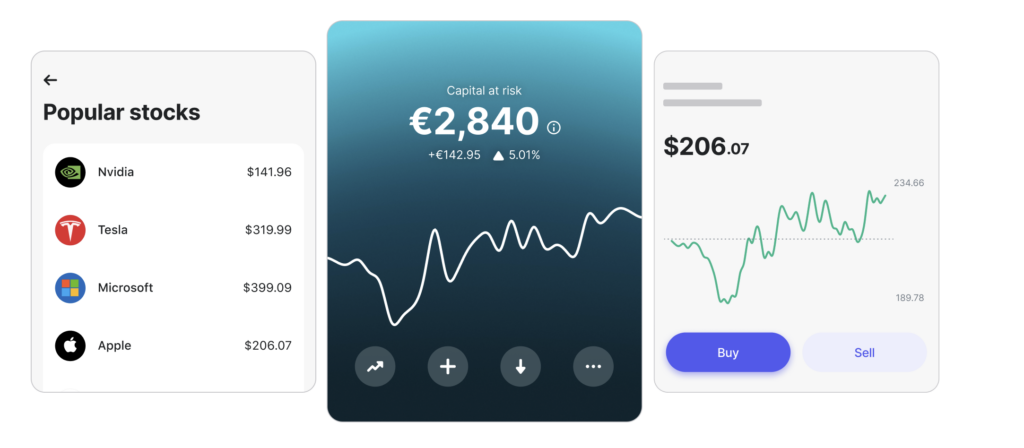
The web trading terminal, available through Trading Pro at €4.99 per month, runs on TradingView charts but only covers stocks and ETFs. It supports no third-party platform like ProRealTime, has no backtesting features, and no multi-criteria screener.
The lack of a demo account also stings. There is no way to test a strategy or get familiar with CFDs without putting real capital on the line. Brokers like Saxo or XTB give you that option.
| Feature | Revolut | Saxo | XTB | Trade Republic |
|---|---|---|---|---|
| Technical indicators | Via TradingView (Trading Pro) | ✅ | ✅ | ✅ |
| Demo account | ❌ | ✅ | ✅ | ❌ |
| ProRealTime | ❌ | ✅ | ❌ | ❌ |
| Advanced screener | ❌ | ✅ | ✅ | ❌ |
| Algorithmic orders | ❌ | ✅ | ❌ | ❌ |
3. Tax reporting is on you
Tax handling matters as much as brokerage fees. And on that front, Revolut leaves you on your own.
Revolut issues no annual tax statement for the investment account. You must calculate and declare all your capital gains, dividends, and income from your brokerage account yourself, according to your country’s rules. For an active trader who chains operations, the administrative burden is significant.
The neobank does produce a tax form for its savings account, but nothing for the securities side. Brokers with local banking roots, like Trade Republic or Saxo, hand clients in several European countries a ready-to-use annual tax statement.
| Feature | Revolut | Trade Republic | Saxo | XTB | Interactive Brokers | DEGIRO |
|---|---|---|---|---|---|---|
| Annual tax statement (investment account) | ❌ | ✅ | ✅ | ✅ | ❌ | ❌ |
The alternatives to Revolut for trading
| Broker | Positioning | Who is it for? |
|---|---|---|
| Trade Republic | Flat €1 per order, no subscription | Cost-conscious stock and ETF trader |
| XTB | 0% commission + CFDs + full platform, no subscription | Active stock and CFD trader who wants built-in analysis tools |
| Saxo | Premium multi-asset broker, no subscription | Multi-market trader after futures, options, and ProRealTime |
| Interactive Brokers | The international reference, no subscription | Advanced trader on large volumes, access to 170+ exchanges, ProRealTime compatibility |
- Trade Republic is the most natural alternative on the stocks and ETF segment. Its flat euro per order beats Revolut from the second monthly order onwards, without requiring any subscription. Read our Trade Republic vs Revolut comparison.
- XTB is the best alternative for the active trader who wants to combine stocks, ETFs, and CFDs in a full analysis platform. Zero commission on stocks and ETFs, paired with xStation 5, makes for a more complete trading experience.
- Saxo stands out for the trader after an exhaustive catalogue and the ProRealTime connection.
- Interactive Brokers remains the reference for advanced traders, but it issues no tax report either, which means handling your own declarations, much like with Revolut.
Revolut Invest review: the takeaway
Revolut has built a coherent investment offer into its banking ecosystem. Opening a brokerage account is free and immediate, even if every order then costs €1.
For an active trader, the limits come quickly. The subscription model does not reduce the cost of orders, and the analysis tools remain too thin for a serious strategy.
Revolut Invest is a worthwhile entry point for the beginner who already banks with the neobank. It is also an efficient way to centralise your finances. But it is not a full trading platform built for analysis, backtesting, or algorithmic trading.
FAQ – Common questions about Revolut Invest
Is Revolut reliable?
Yes. Revolut Bank UAB holds a European banking licence issued by the Bank of Lithuania, and investment services come from Revolut Securities Europe UAB. Your deposits are protected up to €100,000 by the deposit guarantee scheme. On satisfaction, Revolut shows a Trustpilot rating of 4.7 out of 5 across more than 420,000 reviews, even if that score reflects the whole neobank rather than just the investment arm.
Does Revolut handle your taxes?
No. Revolut issues no annual tax statement for the investment account: you calculate and declare your capital gains, dividends, and income yourself, following your country’s rules. Only the savings account comes with a tax form.
How much does trading cost at Revolut?
The free Standard plan gives access to an investment account, but every order costs €1. Free orders only appear from the Premium subscription upwards: five per month, ten with Metal and Ultra. Beyond the quota, every order costs €1, whatever the plan. There are no custody or inactivity fees, but FX fees apply on foreign currencies depending on the plan.
Which Revolut plan should you pick for trading?
For trading alone, the free Standard plan is the cheapest: no subscription, €1 per order. No paid plan lowers that commission, so a subscription only makes sense for its banking perks. Premium (€10.99/month) and Metal (€18.99/month) include five and ten free orders per month and fee-free currency exchange, but those savings don’t cover the subscription price for an occasional trader. As for Trading Pro (€4.99/month), it only matters to those who want the web terminal and its TradingView charts, with no effect on the cost of orders.
How do you contact Revolut support with questions about your investments?
Support runs through the in-app chat, available 24/7 and in more than 100 languages. There is no phone number for Standard, Plus, Premium, and Metal subscribers. Only Ultra subscribers get dedicated phone access, in English only.
Does Revolut still sell precious metals?
No. Revolut closed its precious metals service (gold, silver, platinum, and palladium) in several European countries during 2026. New subscriptions are no longer possible, and existing holders had to close their positions before the shutdown. To stay invested, see our comparison of alternatives for trading precious metals.

Maxime holds two master’s degrees from the SKEMA Business School and FFBC. As founder and editor-in-chief of NewTrading.fr, he writes daily about financial trading.
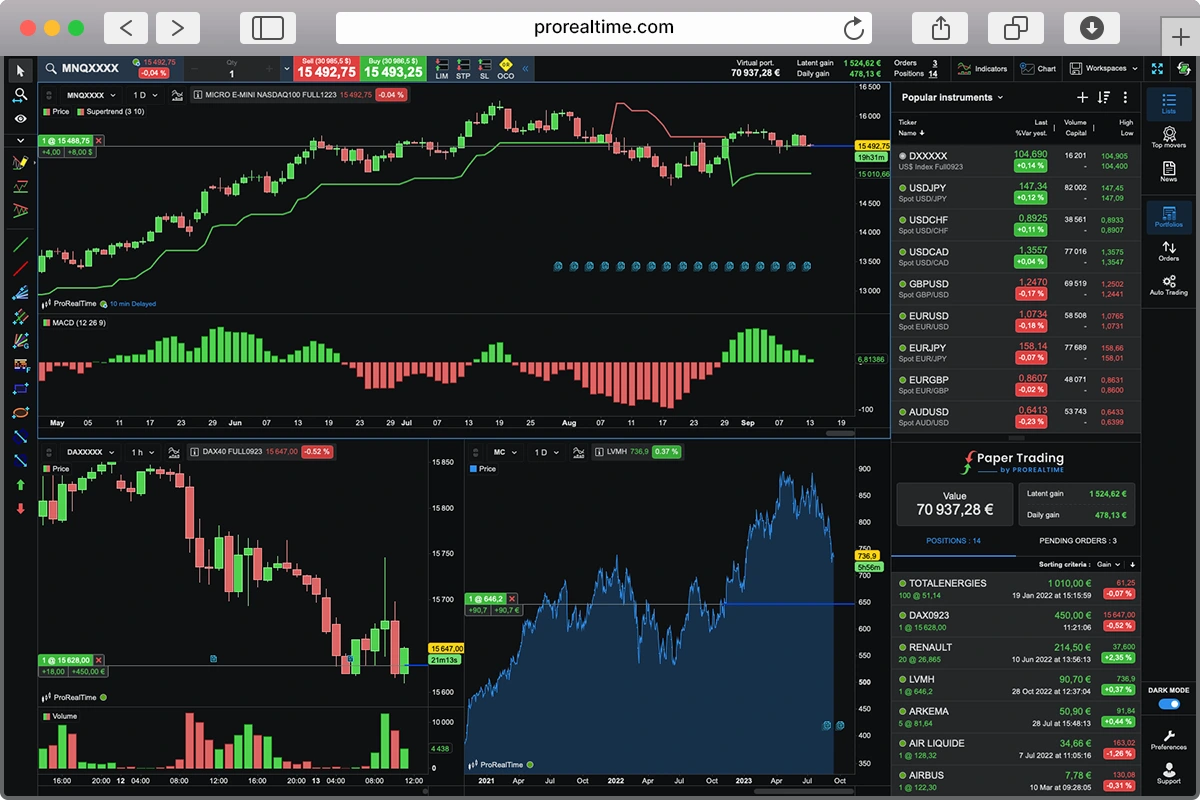
Enjoy free trading practice on
ProRealTime Paper Trading Simulator.