Best Price, Direct Price, Web Terminal: Trade Republic Goes After Active Traders


Trade Republic no longer wants to be just a beginners’ app. On 2 July, the German neobroker unveiled Best Price, Direct Price, and a new Web Terminal: three upgrades aimed squarely at active traders, an audience it had barely courted until now.
That leaves one open question: can this mobile-first broker compete with the best trading platforms?
What Trade Republic just launched
Trade Republic unveiled an overhaul of its trading technology on 2 July 2026, built around three new features. [1]
| Feature | What it does | Price |
|---|---|---|
| Best Price | Best-price execution across 30 exchanges, handled by Trade Republic | €1 per trade |
| Direct Price | You pick the exchange | €2 per trade |
| Web Terminal | Web interface: charting, screeners, derivatives, live data | Free |
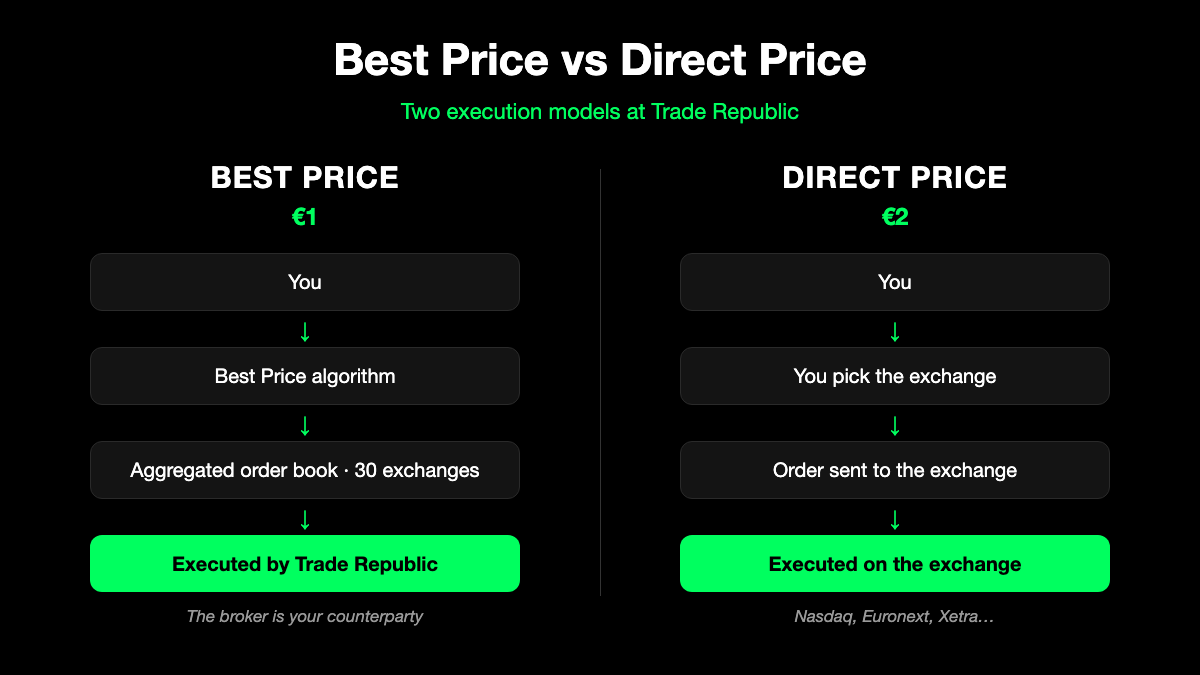
- “Best Price” runs on an aggregated order book that unifies prices from all relevant exchanges, whatever the order size. The new algorithm hunts for the lowest price when you buy and the highest when you sell. Brokerage fees stay flat at €1 per trade, excluding third-party costs and spreads.
- “Direct Price” lets you choose your execution venue from 30 global exchanges, including Xetra, Euronext, the NYSE, and the Nasdaq. It covers market, limit, and stop orders for €2 per trade, whatever the size.
- “Web Terminal” is an advanced web interface developed in-house for active and professional investors. It combines advanced charting, customisable workspaces, stock and derivatives screeners, portfolio analytics, and live market data for the major exchanges, at no extra cost.
The app also displays the aggregated order book in real time, alongside each individual exchange’s book, for free.
Trade Republic Bank GmbH remains a fully licensed bank supervised by BaFin, the German financial regulator. For the details on its model, fees, and available assets, our Trade Republic review covers the essentials.
What changes for active traders
These releases shift Trade Republic’s positioning. Until now, the broker bet everything on a clean, stripped-down mobile experience. The Web Terminal adds a web interface that runs in your browser, with nothing to install, built for analysis and placing orders. It’s free for all clients.
The tool packs enough to work through a trade idea without leaving the platform:
- screeners that filter thousands of stocks, ETFs, bonds, and crypto assets, combining hundreds of criteria;
- advanced charting with 18 chart types, candlesticks, and pattern recognition;
- the combined order book and time & sales data built in;
- derivatives to take leveraged positions, long or short;
- more than 500 free data points to track what moves the market.
On market data, Trade Republic includes real-time feeds from Xetra, Euronext, and Nasdaq for free. Additional exchanges cost from €5 per exchange per month, managed directly from the Web Terminal.
On order execution, Trade Republic now draws a line between two approaches. The first, “Best Price”, hands execution to the broker: its algorithm compares prices across 30 venues, but Trade Republic acts as your counterparty, and that best price is judged against its aggregated book, not routed to an exchange.
The second, “Direct Price”, lets you pick the venue: your order goes to the market you selected, the Nasdaq for instance, but the commission rises to €2.
Trade Republic also pays interest on uninvested cash at the ECB rate, currently 2.25%. For an active trader who closes positions at the end of the day, cash doesn’t sit idle between sessions.
Is Trade Republic really better than Interactive Brokers?
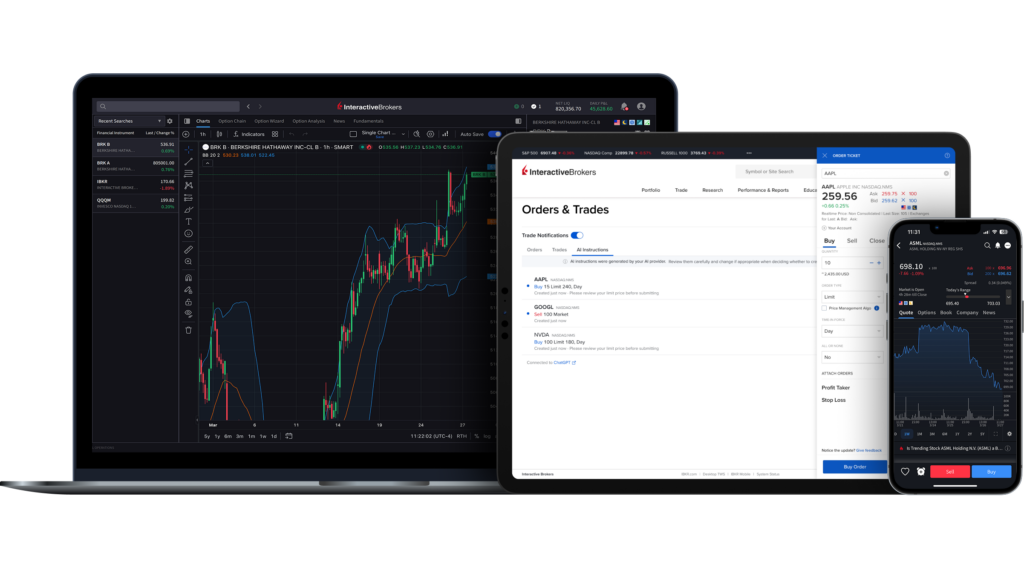
In its 2 July keynote, Trade Republic measured itself against Interactive Brokers, which it cast as the institutional benchmark for the past thirty years, to make the case that it’s cheaper.
On commissions, though, it all depends on the market you trade and the size of your order. [2]
| Broker / plan | US stocks | European stocks (Paris, Xetra) |
|---|---|---|
| Trade Republic, Best Price | €1 flat | €1 flat |
| Trade Republic, Direct Price | €2 flat | €2 flat |
| Interactive Brokers, smart routing | $0.005/share, $1 minimum | 0.05%, €3 minimum, no cap |
| Interactive Brokers, directed routing | smart routing by default | 0.10%, €4 minimum, no cap |
Trade Republic does come out cheaper, but not everywhere. On European stocks the gap is clear: Best Price costs €1 against a €3 minimum at Interactive Brokers, and it widens on larger orders since IBKR’s commission scales with the order value, uncapped.
On US stocks, though, IBKR charges a minimum of $1 per order, roughly in line with Trade Republic’s €1. The price advantage mostly applies to European venues.
Above all, cheaper doesn’t mean better. Interactive Brokers plays in another league on tools and asset coverage: 170 markets, a battle-tested professional platform in Trader Workstation, an API for algorithmic trading, and other applications matched to how you trade. Comparing these two brokers on price alone misses the point.
For a closer look at how Interactive Brokers stacks up against other brokers, our guide to the best Interactive Brokers alternatives runs the comparison.
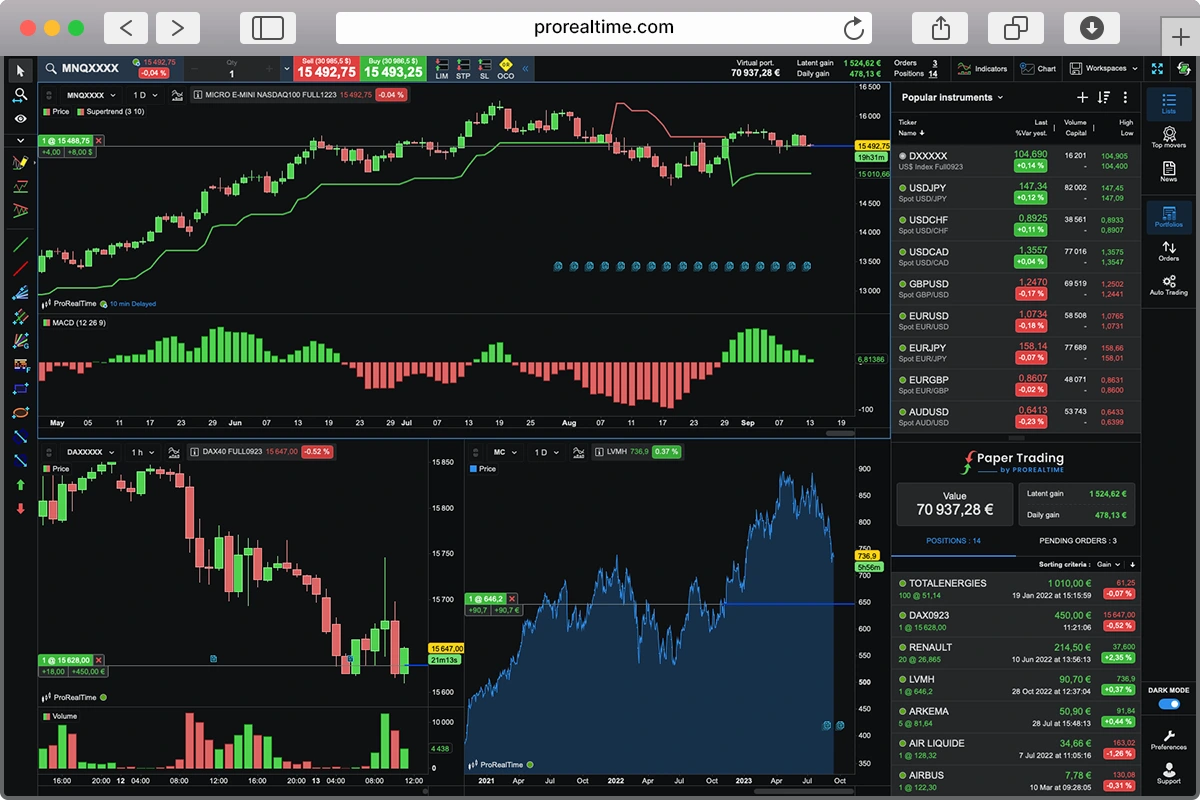
Trade Republic isn’t alone in the low-cost lane either. IG gives access to more than 4,500 stocks and 2,500 ETFs with zero brokerage commission [3] . Its clients can also trade on platforms like ProRealTime or TradingView, on top of IG’s own tools.
Trade Republic edges toward active trading
Trade Republic is making real progress. By opening up to desktop and adding analysis tools, the broker finally speaks to the traders its mobile-only approach used to put off. On price, as long as Best Price stays at €1 and Direct Price at €2, it’s hard to beat, short of the commission-free brokers.
Against giants like Interactive Brokers, Trade Republic stays ultra-competitive on price, without yet matching them on the quality of the trading tools or the breadth of the catalogue.
To see where Trade Republic sits among the competition, check our ranking of the best trading platforms.

Audrey holds a Diploma in Accounting and Financial Studies (DECF) and has over 15 years of professional experience in the banking and accounting sectors.
Enjoy free trading practice on
ProRealTime Paper Trading Simulator.