
Stretched thin


Kevin Warsh is playing for time. But how long can he keep letting inflation run without raising rates? If the US 10-year yield is any guide: not much longer.
By trying to have it both ways, the Fed keeps painting itself into a tighter corner. For a while, markets were mesmerized by the US central bank’s showmanship. Now they’re starting to see the strings behind Kevin Warsh’s sleight of hand.
What was until now a mild tug-of-war fueling internal tensions within the FOMC could turn into a full public split.
At his first speech to the Jackson Hole economic policy symposium this Friday, Warsh will try to revive the dream that inflation returns to the 2% target on its own, without tightening monetary policy.
But isn’t it already too late? This time, markets seem to have figured it out: the Fed’s political independence has limits, and rates won’t climb until investors force Warsh’s hand.
The US government appears to have gotten the message too. The Fed is out of room to maneuver, the split is already complete, and Washington now has to pitch in to keep the situation from turning into a fiasco.
Facing rising bond yields, Treasury Secretary Scott Bessent tried to step up last week by doubling the long-dated debt buyback program.
But this shot in the dark only underlined how serious the situation looks to savvy investors.
This time, the bond market won’t back down until it gets a firm commitment, either from the Fed against inflation, or from the government against the deficit.
My trading plan
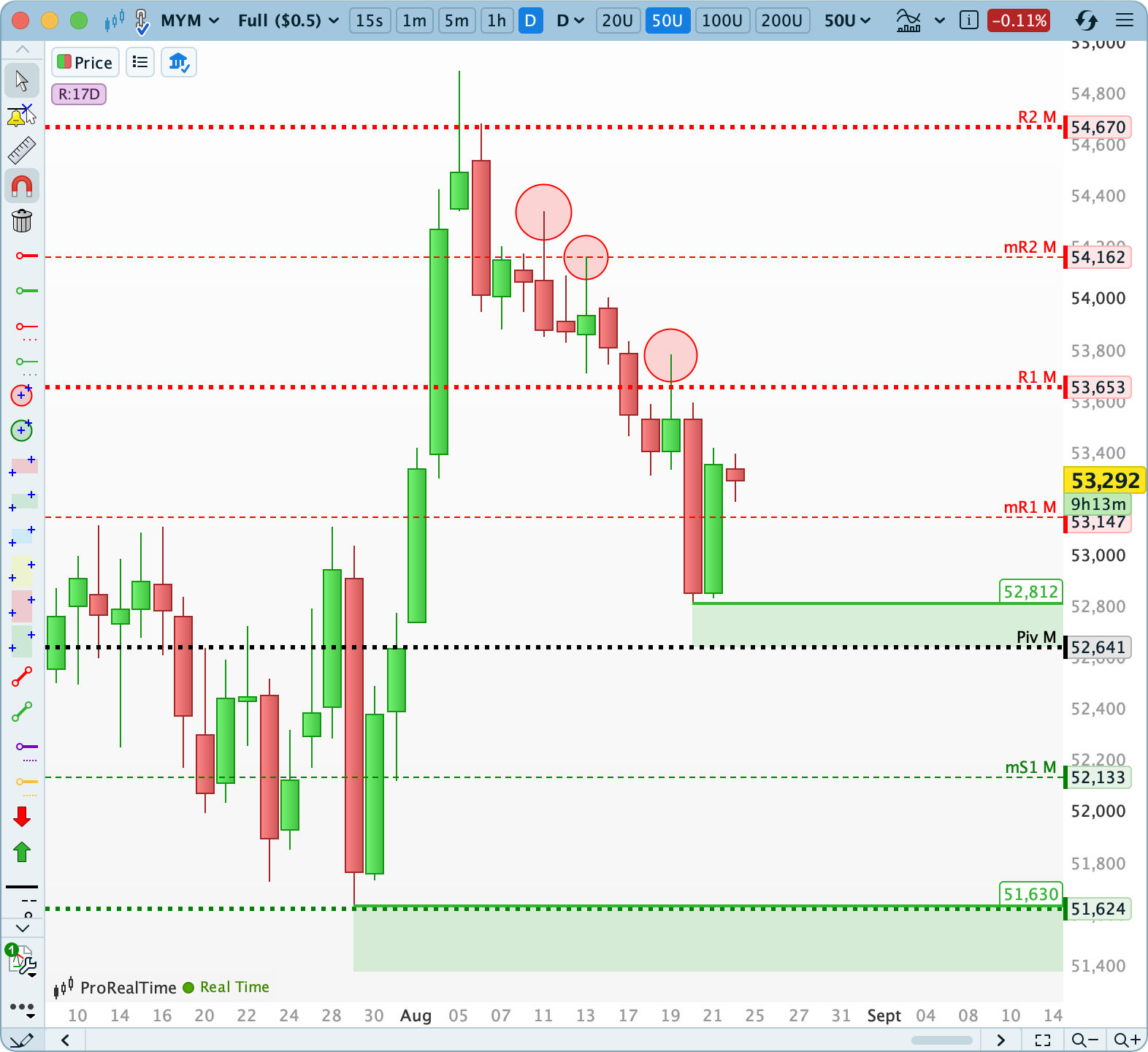
Rebound attempts keep piling up, but none manages to turn the tide. The highs reached by these fanfare starts (red circles) keep sliding lower, denying buyers the chance to lock in profits on the cheap.
In this setup, I’m still watching first and foremost for bursts of enthusiasm that could open the door to short trades, with buyers’ stop-losses sitting below the 51,624-point support in my sights.
Follow my educational trading signals
Happy trading!

Maxime holds two master’s degrees from the SKEMA Business School and FFBC. As founder and editor-in-chief of NewTrading.fr, he writes daily about financial trading.

Critical condition

Come hell or high water

Running out of steam