
Running on fumes


The pitcher goes to the well once too often. By leaning on the same two rusty springs over and over, the rally in stock indices looks more fragile than ever.

First spring: the umpteenth bet on a peace deal between Iran and the United States is working its magic again. But the fact that markets got carried away over a hypothetical military strike that was called off, rather than actual talks, says a lot about how far optimism has run.
Second spring: the Federal Reserve’s kid-gloves treatment of markets brings back memories of past mistakes. Like a deer in the headlights, Kevin Warsh tried his best to justify his (in)action on inflation, but he didn’t convince anyone.
That passivity plays into the hands of US debt and gets rewarded by markets in the short term, but the longer-term fallout could be devastating if price rises pick up speed and dig into the US economy for good.
Three Fed members did try to play Cassandra and sound the alarm at the last meeting by voting for a rate hike, but the majority of the Board of Governors still doesn’t seem ready to tap the brakes.
The irony: for the first time in 15 years, the United States stepped in to help its Japanese ally on Friday, propping up a Yen that was sinking on the currency market. The original cause of that mess? Too much slack from the Bank of Japan.
My trading plan
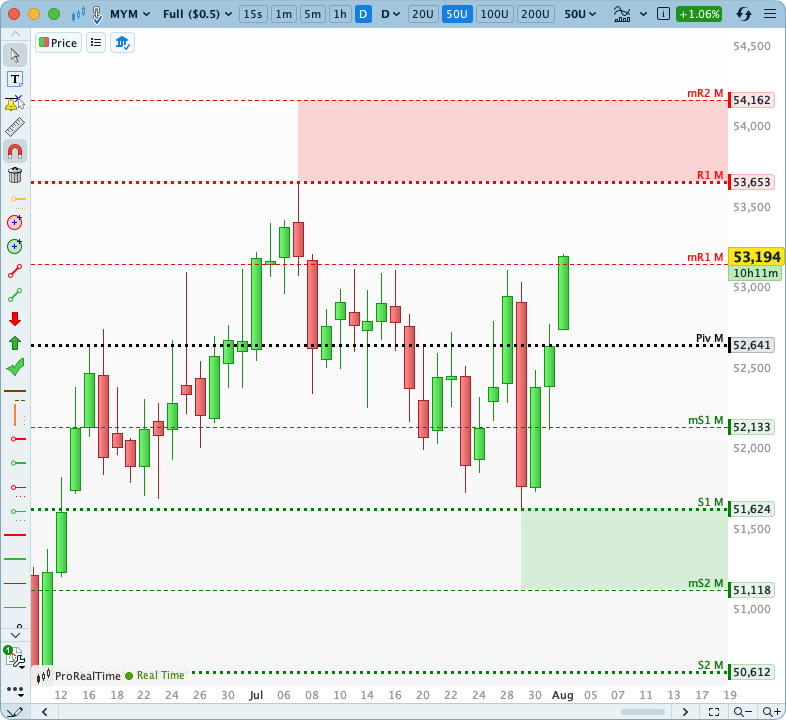
After hitting the key level of 51,692 points, our bearish target from the past few weeks, the market is charging back hard toward its yearly highs.
Until proven otherwise, buyers have taken back control, but the behavioral analysis in the first part of this newsletter tells me to stay on high alert.
So I’m giving myself some time to watch before handing you a new weekly target. In the meantime, you can now follow my educational trading signals to see my main trades of the session.
Happy trading!

Maxime holds two master’s degrees from the SKEMA Business School and FFBC. As founder and editor-in-chief of NewTrading.fr, he writes daily about financial trading.
The vise tightens

Dead cat bounce
Perfect timing