Trade Republic Review 2026: Read Before Opening an Account

With over 10 million users across 18 European countries, Trade Republic has become the continent’s most popular neo-broker in just a few years. A full EU banking license, €1 trades, and free savings plans make for a compelling pitch.
But behind the clean app and aggressive marketing budgets, how does the actual product hold up for someone who wants to do more than buy and hold?
In this review, we cover:
- What Trade Republic costs and how it compares to alternatives
- Where the platform genuinely shines and where it falls short
- Which trader profiles benefit most from this broker
 Why trust us
Our reviews are built on real-world experience. We work closely with experienced traders who’ve spent dozens of hours testing these platforms to ensure each recommendation is reliable and practical. Visiting the tools we mention through the links on our website may generate a commission that helps support our mission to make trustworthy financial knowledge free and accessible for everyone—at no extra cost to you. Thank you for supporting us!
- Tested by traders, not marketers
- 30+ hours of testing
- Designed to help beginners

Trade Republic is a German bank with a full EU banking license (ECB-regulated since 2023). Through a single app, users invest in stocks, ETFs, bonds, crypto and derivatives at a flat €1 per trade, with free automated savings plans from €1.
Trading carries significant risks, including the potential loss of your initial capital or more. Most traders lose money, and trading is not a guaranteed path to wealth.
Our Take on Trade Republic
Trade Republic built its reputation on one thing: simplicity. One euro per trade, a clean mobile app, and savings plans that run on autopilot. For passive investors who want to set up a monthly ETF purchase and forget about it, this is one of the cheapest and easiest ways to get started in Europe.
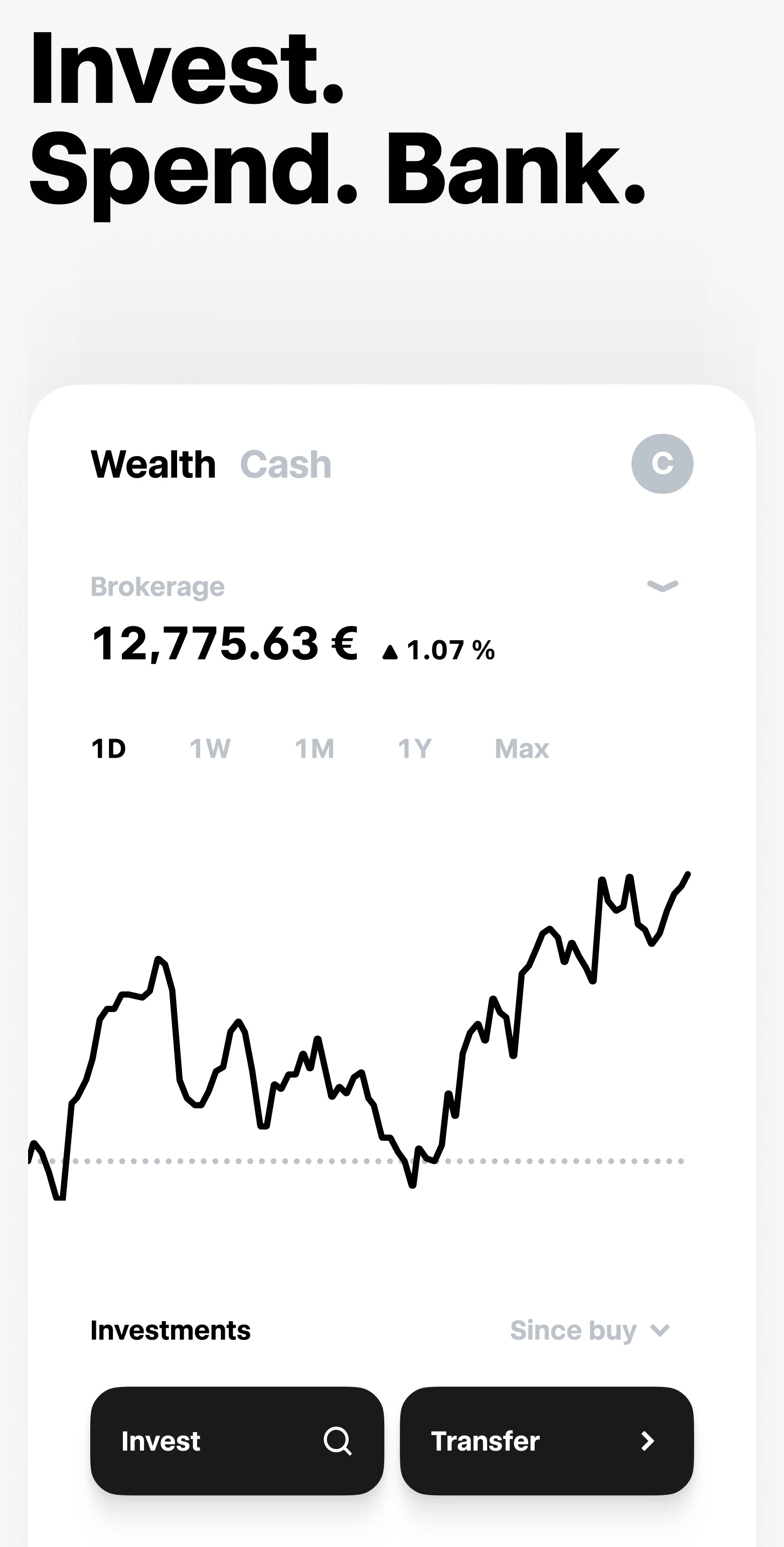
The app has zero charting tools, zero screeners, and zero backtesting. You cannot draw a trendline, set up a watchlist alert, or run a basic moving average. If your strategy goes beyond “buy and hold,” you will spend your time in the Web Terminal, the free web interface launched in July 2026, rather than in the app.
The product range covers the essentials: 7,500 stocks, 2,000+ ETFs, bonds, crypto, and around 380,000 derivatives from HSBC, Société Générale, UBS, and Vontobel. No CFDs, no futures, no options. Short selling is only possible through derivative products.
Customer support is the weak link. A 3.3/5 Trustpilot score with 20% one-star reviews tells the story: most complaints center on automated responses, no phone line, and transfers stuck in limbo for days. When things work, Trade Republic is invisible in the best way. When they don’t, getting help is a frustrating experience.
Since receiving a full EU banking license from the ECB in late 2023, Trade Republic also functions as a bank: personal IBAN, 2% interest on unlimited cash, and a debit card with 1% Saveback on purchases. It has grown to 10 million customers and over €150 billion in assets under management.
Who Is Trade Republic For?
Trade Republic targets passive investors first, but a few active profiles can make it work too. Three trader types get the most value out of this broker.
The beginner building a first portfolio
You want to start investing without overthinking fees or platforms. Trade Republic removes the friction: €1 per trade, a signup process that takes minutes, and an interface stripped down to the essentials. You find a stock or ETF, place a market or limit order, and the execution happens in seconds.
Fractional shares mean you can buy €50 of an MSCI World ETF instead of waiting until you can afford a full share. Set up a free savings plan (weekly, monthly, or quarterly), and your portfolio grows on autopilot.
The catch: Trade Republic won’t teach you anything. No charting tools, no educational content built into the app, no demo account to practice with. To develop your skills beyond order execution, you will need a separate platform like ProRealTime or TradingView for analysis.
The cost-conscious warrants and turbos trader
You speculate on short-term moves through leverage products. Trade Republic gives access to around 380,000 derivatives from HSBC, Société Générale, UBS, and Vontobel, all at the same €1 flat fee. For a trader running multiple round-trips on CAC 40 turbos or stock warrants in a single session, that pricing adds up to serious savings compared to traditional banks.
Same limitation applies here: you run your analysis elsewhere and come to Trade Republic to execute.
The stock picker who values simplicity
You trade European and US large-caps without leverage or complex instruments. The catalog of 7,500 stocks covers most major names on both sides of the Atlantic. Fractional shares help diversify even a small account.
If you trade small caps, emerging markets, or Asian stocks, the catalog will feel thin fast. DEGIRO or Interactive Brokers cover significantly more markets and instruments.
Is Trade Republic Safe?
Trade Republic checks the regulatory boxes that matter for European investors. But regulation and day-to-day experience are two different things.
Regulation
Trade Republic Bank GmbH holds a full German banking license, supervised by BaFin (Federal Financial Supervisory Authority) and the Bundesbank. Since December 2023, this license is issued by the European Central Bank, making Trade Republic a fully regulated EU bank, not just a broker.
This means two layers of protection. Cash deposits are covered up to €100,000 under the EU deposit guarantee scheme. Securities (stocks, ETFs, bonds) are held in your name by Trade Republic Bank GmbH in segregated custody accounts. If Trade Republic went bankrupt, your assets would not be part of the insolvency estate.
Trade Republic can passport its services across EU member states without needing a separate license in each country. It currently operates in 18 countries, from Germany and France to the Baltics and Poland (added in September 2025).
Ownership
Founded in 2015 in Munich under the name Neon Trading by Christian Hecker, Thomas Pischke, and Marco Cancellieri. Now headquartered in Berlin.
The company raised over €1 billion across multiple funding rounds, backed by Sequoia Capital, Accel, and other major VCs. In December 2025, a secondary share sale valued the company at roughly €12.5 billion.
With 10 million customers and over €150 billion in assets under management, Trade Republic is no longer a scrappy startup. It is one of the largest retail brokers in Europe by client count.
What Users Say (Trustpilot)
Trade Republic holds a 3.3 out of 5 on Trustpilot based on over 33,000 reviews (as of April 2026).
| Rating | Share |
|---|---|
| 5 stars | 66% |
| 4 stars | 10% |
| 3 stars | 1% |
| 2 stars | 3% |
| 1 star | 20% |
The distribution is polarized: two thirds of users rate the experience five stars, but one in five gives the lowest possible score. Very few land in between.
Top three complaints:
- Customer support runs almost entirely on automated responses. Multiple users report being stuck in bot loops with no way to reach a human.
- Bank transfers getting rejected or hanging for days, especially when the account name does not match exactly (common with joint accounts).
- Account restrictions or verification issues that block trading with no clear resolution path.
Top three praises:
- Clean, intuitive app that makes investing feel effortless.
- Low fees and free savings plans.
- Competitive interest on uninvested cash.
The pattern is consistent: Trade Republic works well when everything runs smoothly. The problems start when something goes wrong and you need a human to fix it.
Pricing: What Does It Cost?
Trade Republic’s fee structure is the simplest you will find among European brokers. Almost everything fits in one line: €1 per trade.
Fee schedule
| Type | Cost | Conditions |
|---|---|---|
| Stocks, ETFs, bonds | €1 per order | Any amount, any market |
| Savings plans (DCA) | €0 | Scheduled weekly, bi-weekly, monthly, or quarterly |
| Warrants and turbos | €1 per order | HSBC, Société Générale, UBS, Vontobel |
| Crypto | €1 per order | + spread built into the price |
| Currency conversion | €0 | No explicit conversion fee |
| Custody | €0 | No holding fees |
| Inactivity | €0 | No penalty for dormant accounts |
| Account opening and closing | €0 | |
| Bank transfer deposits | €0 |
Cost modeling: what a typical investor actually pays
Scenario 1: Monthly DCA investor. You set up a €500 monthly savings plan split across three ETFs. Cost: €0. The savings plans are free regardless of amount or frequency. Over a year, you invest €6,000 and pay nothing in transaction fees.
Scenario 2: Stock buyer. You buy €2,000 of Siemens shares with a market order. Cost: €1. The same order at a traditional German bank would typically cost €10 to €25 depending on the institution.
Scenario 3: Active turbos trader. You run 10 round-trips on CAC 40 turbos in a week. Cost: €20 (10 buys + 10 sells at €1 each). At a traditional bank charging €5 to €15 per order, the same activity would cost €100 to €300.
The hidden cost: execution
All orders execute on a single venue: Lang & Schwarz Exchange (LS Exchange), a publicly regulated exchange in Hamburg. Trade Republic receives a rebate for each order routed there, a practice known as payment for order flow (PFOF). The European Union has voted to ban PFOF across member states, with Germany’s temporary exemption expiring on 30 June 2026. In January 2026, a Trade Republic subsidiary obtained a BaFin license to operate its own multilateral trading facility, preparing for the transition.
In practice, the spread on LS Exchange can be wider than on Xetra or Euronext, particularly for less liquid stocks or during off-hours trading. The €1 fee saves you money on the visible cost, but the spread difference can eat into your returns on larger orders.
For a €500 ETF purchase through a savings plan, this spread difference is negligible. For a €10,000 single stock order on a mid-cap during low-volume hours, it can matter. Compare the quoted price on LS Exchange with Xetra before placing large orders.
How Trade Republic makes money
Three revenue streams: (1) rebates from Lang & Schwarz Exchange for order routing (currently less than 30% of revenue and declining as the EU PFOF ban approaches), (2) commissions from ETF providers on savings plan executions, and (3) the margin between the ECB deposit rate it earns on client cash and the 2% it passes through. The company reported a profit of €34.8 million for the 2023/24 financial year on roughly €340 million in revenue.
Savings Plans and Fractional Investing: Trade Republic’s Core Advantage
Strip away the marketing, and this is why 10 million people signed up. Free automated savings plans combined with fractional investing from €1 turn Trade Republic into a set-and-forget wealth building machine. No other European broker matches this combination at zero cost.
How savings plans work
You pick a stock, ETF, or crypto, set an amount (minimum €1), choose a frequency (weekly, bi-weekly, monthly, or quarterly), and Trade Republic executes the purchase automatically. No transaction fee. No minimum holding period. You can pause, modify, or cancel any plan at any time.
This is euro-cost averaging without the friction. Instead of remembering to log in every month and placing an order manually, the money moves on schedule. For an investor putting €200 per month into an MSCI World ETF, the entire year costs €0 in fees. At DEGIRO, which has no automated savings plans, you would need to place each order manually and pay a handling fee per transaction. At a traditional bank, the same strategy would cost anywhere from €60 to €300 per year depending on the fee structure.
Fractional investing
Most ETFs and stocks on Trade Republic support fractional purchases. A single share of a large-cap stock can cost hundreds of euros. Fractional shares let you invest any amount regardless of the share price.
This matters most for portfolio diversification on smaller accounts. A beginner with €200 per month can spread that across five or six different ETFs and stocks instead of being forced into a single position because they cannot afford full shares.
Fractional bonds work too. Government and corporate bonds are accessible from €1 on Trade Republic. For investors looking to lock in a fixed yield without tying up large amounts, this opens a segment that was previously out of reach for retail.
Saveback and Round-Up
Trade Republic’s debit card adds two features on top of the savings plans.
Saveback returns 1% of your card spending as cash invested into a savings plan of your choice. Cap: €15 per month (based on €1,500 in spending). A “Pay with Crypto” option bumps the Saveback to 2%, capped at €30 per month. To qualify for either, you need to invest at least €50 per month through savings plans.
Round-Up rounds every card payment up to the next euro and invests the spare change into a savings plan. Buy a coffee for €3.40, and €0.60 goes into your portfolio automatically.
Neither feature will build serious wealth on its own. But compounded on top of regular savings plans, they turn everyday spending into small, consistent investments with zero effort.
Interest on cash
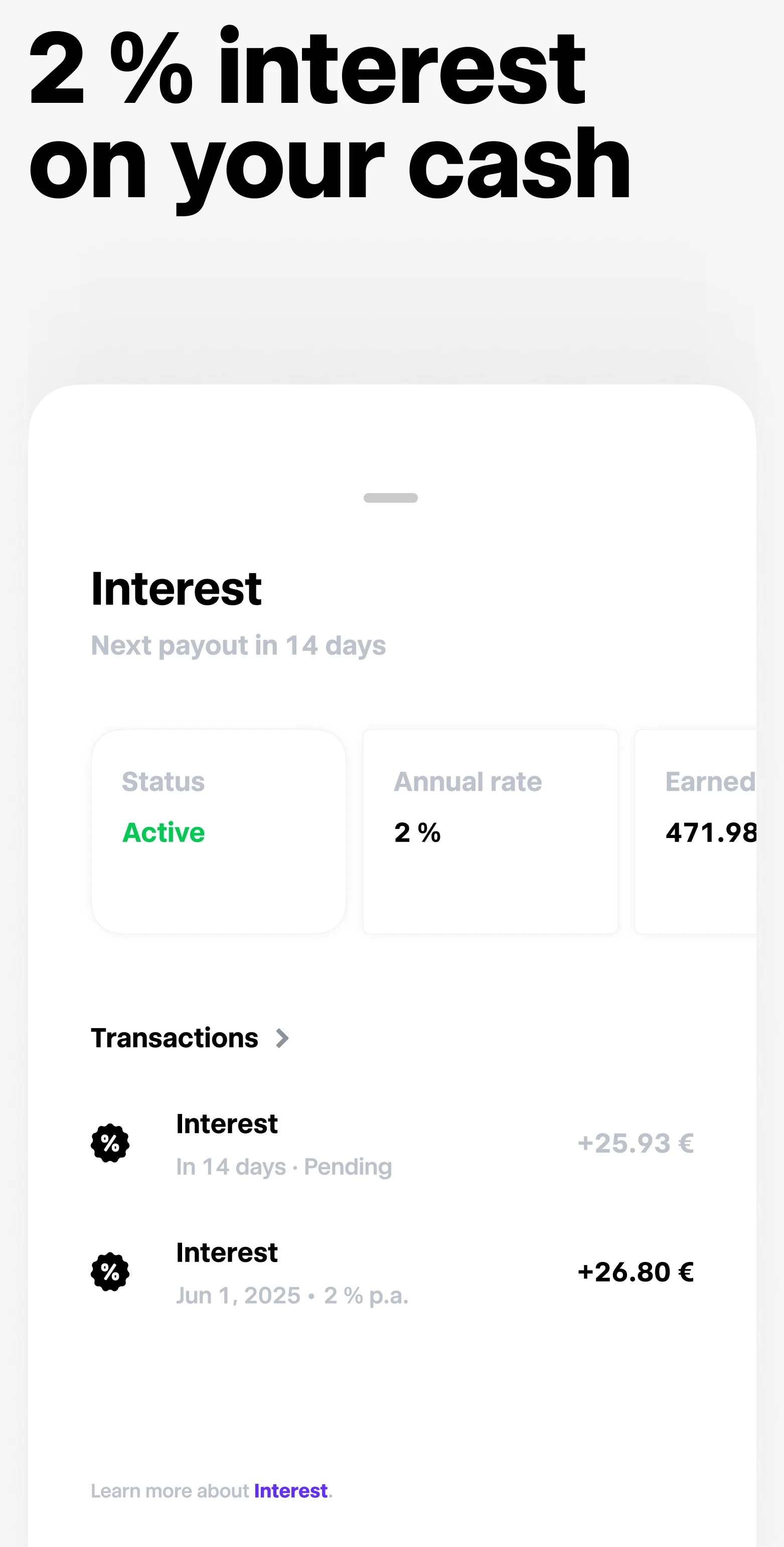
Trade Republic pays 2% per year on uninvested cash with no cap. The rate tracks the ECB deposit facility rate, so it moves with monetary policy. When the ECB deposit rate was higher, Trade Republic’s rate tracked it upward. As rates came down through 2025, so did the return.
This is competitive with most European savings accounts and significantly better than the 0% most brokers pay on idle cash. The interest accrues daily and pays out monthly.
3 Key Strengths
1. The cheapest way to invest regularly in Europe
Trade Republic’s pricing is not just low. For savings plans, it is zero. No European broker with a comparable product range matches this at zero cost. DEGIRO has no automated savings plan at all. Other brokers that offer savings plans typically charge a fee per execution or limit the selection of available assets.
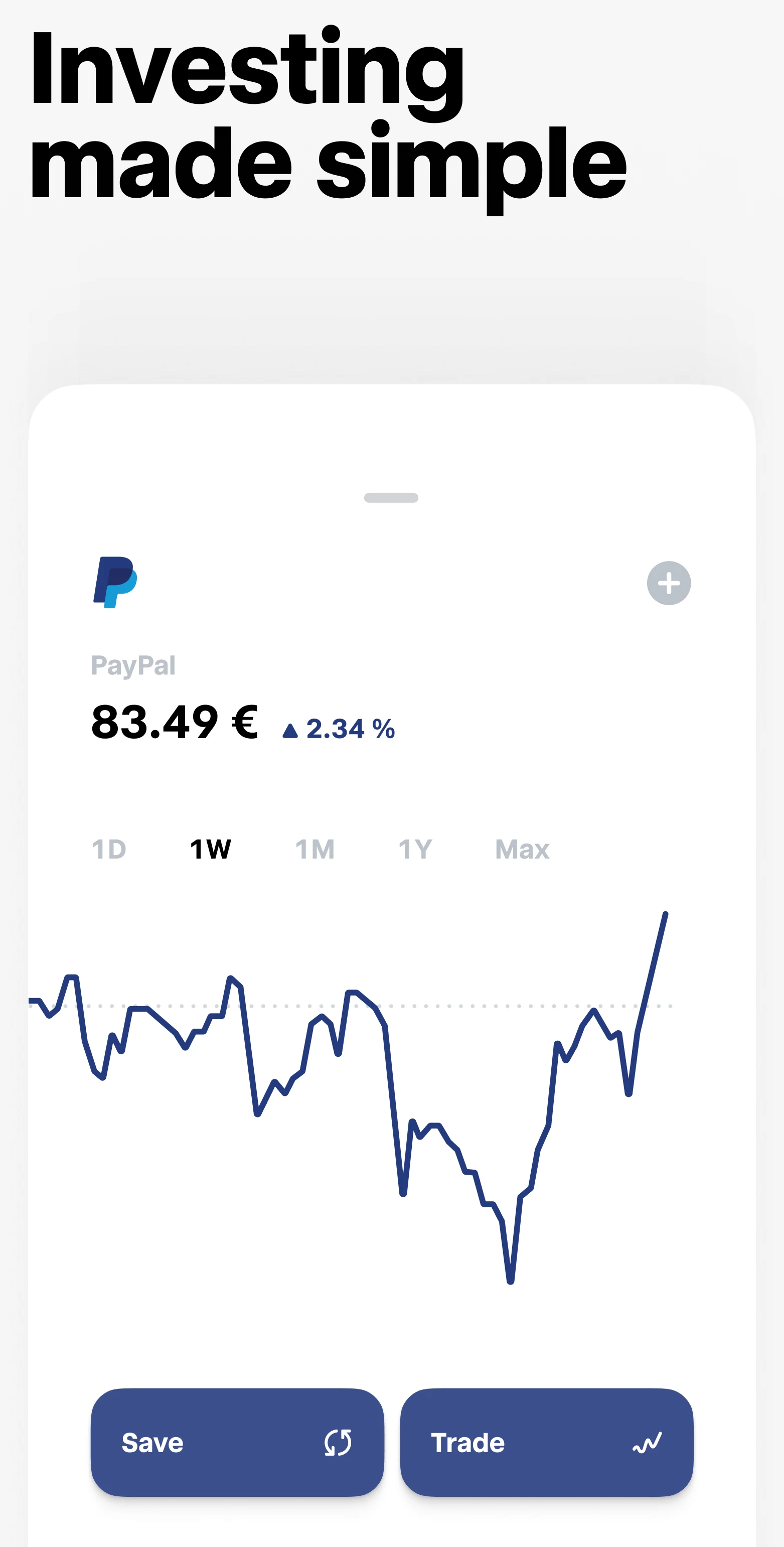
For one-off trades, the €1 flat fee holds regardless of order size. A €100 purchase costs the same as a €50,000 one. No tiered pricing, no percentage-based commissions, no hidden platform fees. This makes Trade Republic particularly attractive for investors who make frequent small purchases, a profile that would get crushed by percentage-based fee structures.
Zero custody fees, zero inactivity fees, and zero account fees complete the picture. The total cost of ownership for a passive investor who uses only savings plans is literally €0 per year. Even the most cost-conscious comparison struggles to beat that.
2. A real bank, not just a broker
The ECB banking license Trade Republic received in December 2023 changed the product fundamentally. Before that, Trade Republic was a broker that held your securities. Now it is a bank that also lets you invest.
The personal IBAN means you can receive your salary, pay bills, and invest from the same account. Cash earns 2% interest. The debit card works worldwide with free ATM withdrawals above €100. Saveback and Round-Up features feed card spending back into your savings plans.
This combination eliminates a step that most investors deal with: transferring money from your bank to your broker before you can invest. With Trade Republic, the money is already there. For someone who wants a single app for everyday banking and long-term investing, the integration is genuinely convenient.
The banking license also strengthens investor protection. Cash is now covered under the EU deposit guarantee (€100,000) directly through Trade Republic, not through a third-party partner arrangement.
3. Account opening and onboarding that actually works
In an industry where opening a brokerage account can take days of paperwork and verification, Trade Republic’s onboarding stands out. Download the app, complete the KYC verification (ID scan and a few questions), fund your account, and you can place your first order the same day.
You can fund your account via bank transfer or debit card. There is no minimum deposit.
The app itself needs almost no learning curve. The home screen shows your portfolio value, a search bar finds any available product, and placing an order takes three taps. For someone who has never used a brokerage app before, this is as frictionless as it gets.
Compare this with Interactive Brokers, where the Trader Workstation takes weeks to learn, or even DEGIRO, where the interface feels dated and unintuitive. Trade Republic’s onboarding is a genuine competitive advantage, especially for the beginner audience it targets.
3 Key Weaknesses
1. In-app analysis tools remain minimal
In the app, Trade Republic remains an execution tool: you place orders, and that is about it. The Web Terminal, launched in July 2026, fills part of the gap with a free browser interface: 18 chart types, indicators, stock and derivatives screeners, and real-time data from Xetra, Euronext, and Nasdaq.
In the app, there are no charts beyond a basic price line. No candlesticks, no volume bars, no technical indicators. You cannot draw a support level or screen stocks by any fundamental metric. There is no economic calendar and no advanced watchlist with customizable columns.
This is not a minor gap. It means every Trade Republic user who does any form of analysis needs a second tool. ProRealTime, TradingView, or even a free charting website. You analyze there, then switch to Trade Republic to execute. For a beginner who does not yet know they need analysis tools, this creates a blind spot: the app makes buying easy without giving you any framework to decide what or when to buy.
DEGIRO at least has basic charting. Interactive Brokers and Saxo have professional-grade analysis suites built into their platforms. Even eToro, which also targets beginners, includes charts with indicators and a social trading feed. Trade Republic’s decision to ship zero analytical features is a deliberate product choice, not a temporary limitation.
2. Customer support that barely exists
A 3.3/5 Trustpilot rating with 20% one-star reviews points to a structural problem, not a few unlucky experiences. The recurring pattern across thousands of complaints is the same: you submit a request, a bot sends a template response, and the loop repeats until you either give up or the issue resolves itself.
There is no phone support. Trade Republic offers an in-app chat and contact form, but Trustpilot reviewers consistently report automated responses and bot loops rather than human agents. Multiple users describe waiting days for a first reply, then receiving answers that do not address their actual question.
For routine investing, this does not matter. You set up your savings plans, they run, and you never need to contact anyone. The problem surfaces when something goes wrong: a transfer that does not arrive, a verification issue that blocks your account, a tax document with an error. These situations need a human, and Trade Republic makes reaching one extremely difficult.
With 10 million customers and a cost structure built on automation, this is unlikely to change soon. If responsive support is important to you, Saxo and Interactive Brokers operate on a different level entirely.
3. Trade Republic still sits between you and the exchange
Until July 2026, every order routed to the LS Exchange in Hamburg, with no alternative. The Best Price mode introduced since, the €1 default, compares prices across 30 exchanges through an aggregated order book. One nuance remains: Trade Republic acts as your counterparty, so your order is matched against that book rather than routed to the exchange itself.
During regular trading hours and for highly liquid stocks and ETFs, the executed prices are generally in line with Xetra or Euronext. The difference is small enough to be irrelevant for a €200 monthly ETF purchase.
For larger orders, less liquid securities, or trades placed outside of core hours, the gap can widen. That is what the Direct Price mode is for: you pick the venue, Xetra, Euronext, the NYSE, or the Nasdaq, and your order routes there for €2. The platform also displays the aggregated order book alongside each exchange’s own book, so you can compare before you trade.
DEGIRO lets you trade on multiple exchanges across Europe, the US, and Asia. Interactive Brokers gives access to markets worldwide with smart order routing that seeks the best price. Trade Republic now covers 30 venues between Best Price and Direct Price. For passive investing, the difference is a non-issue. For very large or time-sensitive trades, execution quality still favors the incumbents.
Trade Republic vs the Competition
| Trade Republic | ProRealTime | DEGIRO | XTB | eToro | |
|---|---|---|---|---|---|
| Best for | Passive DCA investing | Advanced charting and analysis | Low-cost multi-exchange trading | Commission-free stocks + CFDs | Social and copy trading |
| Transaction fee | €1 (savings plans free) | Depends on broker (IG, Saxo, IBKR) | €1 (+ connectivity fee per exchange) | 0% up to €100K/month (CFDs have spread) | $1-2 per stock trade (spread on CFDs) |
| Stocks | 7,500 | Via connected broker | Multiple exchanges | 8,700+ (stocks + ETFs) | 6,000+ (20 exchanges) |
| ETFs | 2,000+ | Via connected broker | Core selection (€1 handling fee) | Included in 8,700+ | Available |
| CFDs / Futures | No | Futures via IBKR/IG | No | Yes (CFDs) | Yes (CFDs) |
| Charting tools | None | Professional-grade | Basic | Decent (built-in) | Basic with social layer |
| Savings plans | Free, from €1 | No | No | Yes (Investment Plans) | No |
| Mobile app | Excellent | Web + desktop focused | Functional | Good | Good |
| Regulation | BaFin / ECB | AMF (France) | BaFin / AFM | KNF (Poland) | CySEC / FCA |
ProRealTime sits in a different category. It is not a broker but a charting and analysis platform that connects to brokers like Interactive Brokers, IG, and Saxo for execution. For a Trade Republic user who lacks analysis tools, ProRealTime fills that gap: you analyze on ProRealTime, execute on Trade Republic. The free version covers most needs. The Complete version (from €24/month, refundable with active trading through a connected broker) unlocks real-time data and advanced features like ProBacktest.
DEGIRO: Best for investors who want low fees and access to multiple global exchanges. DEGIRO costs slightly more per trade but gives you far more markets, including Asian and emerging market stocks that Trade Republic does not carry. No savings plans, no banking features.
XTB: Best for traders who want commission-free stock trading combined with CFD access. XTB covers both passive investing (fractional shares, 0% commission up to €100K/month) and active trading (CFDs on forex, indices, commodities). Better charting tools than Trade Republic, though not at ProRealTime’s level.
eToro: Best for beginners who want to learn by copying experienced traders. eToro’s CopyTrader feature lets you mirror the portfolios of other users. Higher spreads than Trade Republic, but the social layer and built-in community add a dimension that no other broker here has.
Saxo: Best for serious investors who need a full-service broker. Saxo covers 50+ global markets, and has bonds, mutual funds, futures, and options, with responsive human customer support. Fees are higher, but you get professional-grade tools and one of the widest product ranges in Europe.
The Verdict
Trade Republic does one thing better than anyone else in Europe: making passive investing cheap and effortless. Free savings plans, fractional shares from €1, a banking license with interest on cash at the ECB rate, and an app that takes minutes to set up. For the investor who wants to put money into ETFs every month and not think about it again, this is the most cost-effective option available.
The platform has no charting tools, routes all orders through a single exchange, and customer support runs largely on automated responses. If your needs go beyond buying and holding, you will hit those limits quickly.
If you are starting out, Trade Republic paired with a free charting platform like ProRealTime gives you execution and analysis without paying broker-level fees. If your needs grow beyond buy-and-hold, DEGIRO, XTB, or Interactive Brokers will serve you better as a primary broker.
Trade Republic is not the best broker. It is the best entry point.
FAQ
Is Trade Republic safe for my money?
Trade Republic holds a full EU banking license issued by the ECB and is supervised by BaFin and the Bundesbank. Cash deposits are protected up to €100,000 under the EU deposit guarantee scheme. Securities are held in your name in segregated custody accounts and remain yours even if Trade Republic goes bankrupt.
Is Trade Republic good for beginners?
Yes, if your goal is long-term passive investing. The app is intuitive, fees are minimal, and savings plans automate the process. However, Trade Republic has no educational content, no demo account, and no analysis tools. Beginners who want to learn trading mechanics will need a separate platform.
What fees does Trade Republic charge?
A flat €1 per trade for stocks, ETFs, bonds, crypto, and derivatives. Savings plans are free. No custody, inactivity, or account fees. The main hidden cost is the spread on the LS Exchange, which can be wider than Xetra for less liquid stocks.
Can I use Trade Republic for active trading?
Technically yes, but it is not built for it. There are no charting tools, no screeners, no price alerts based on indicators, and no multi-exchange access. Active traders typically use Trade Republic for cheap execution while running their analysis on ProRealTime or TradingView.
What happens if Trade Republic goes bust?
Your securities are safe. Stocks, ETFs, and bonds are held in segregated custody accounts in your name. They do not become part of Trade Republic’s insolvency estate. Cash up to €100,000 is covered by the EU deposit guarantee. Assets above that threshold carry counterparty risk.
How does Trade Republic make money with €1 trades?
Three sources: rebates from Lang & Schwarz Exchange for routing orders there (a practice the EU is phasing out by mid-2026), commissions from ETF providers on savings plan executions, and the margin between the ECB deposit rate and the 2% interest it pays on client cash. The company reported a profit for the 2023/24 financial year.
Does Trade Republic offer a demo account?
No. There is no paper trading or demo mode. You trade with real money from day one. If you want to practice without risk, open a demo account at a broker like IG or XTB, then use Trade Republic when you are ready to invest.
How do I transfer my portfolio away from Trade Republic?
Trade Republic charges a fee per position for outgoing transfers. An alternative is to sell your positions on Trade Republic and rebuy them at your new broker, which may be cheaper depending on transaction taxes and fees. Check Trade Republic’s fee schedule for current transfer-out costs.
Is Trade Republic available in my country?
Trade Republic operates in 18 European countries: Germany, France, Austria, Belgium, Estonia, Finland, Greece, Ireland, Italy, Latvia, Lithuania, Luxembourg, Netherlands, Poland, Portugal, Slovakia, Slovenia, and Spain. It is not available in the UK, Switzerland, or outside Europe.

Maxime holds two master’s degrees from the SKEMA Business School and FFBC. As founder and editor-in-chief of NewTrading.fr, he writes daily about financial trading.
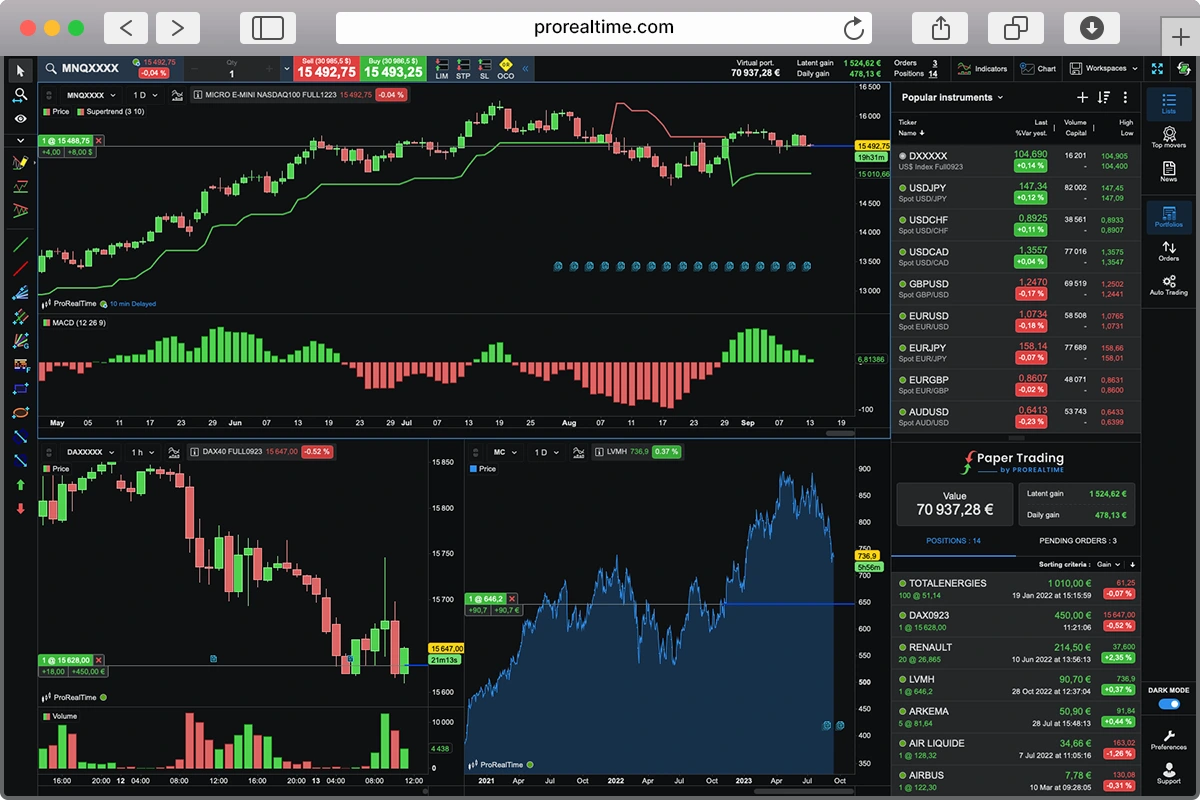
Start Trading on a Demo Account with
ProRealTime Paper Trading Simulator.